
An uncoated neodymium cylinder magnet can start rusting within days. That is a risk no engineer should take. At Fullzen Technology, we help you avoid premature failure by selecting the right coating – nickel, zinc, or epoxy – based on your actual working conditions. This guide compares each coating's corrosion resistance, hardness, and ideal applications. You will also learn maintenance tips and how our custom coating service can match your exact drawing requirements. Read on to protect your investment.
Why Coatings Are Essential for Neodymium Magnets
An uncoated neodymium cylinder magnet is surprisingly fragile. Because it contains iron, it rusts quickly when exposed to oxygen and moisture. In a humid workshop, an unprotected high-performance magnet can start showing surface damage within just a few days. Magnetic output drops permanently. For any serious application – a sensor, a motor, a coupling – this is unacceptable.
Corrosion Protection and Longevity
The main job of any coating is to seal the magnet surface from air and water. A good coating acts as a barrier. Standard laboratory salt spray tests (ASTM B117) show that a bare magnet fails within two hours, while a nickel-coated cylinder magnet can last 24 to 72 hours. An epoxy-coated part often exceeds 100 hours. This directly translates to longer service life in real-world conditions, from factory floors to outdoor installations.
Enhanced Mechanical Strength
Coatings also add a layer of physical protection. Neodymium magnets are strong but brittle. A sharp impact can chip the edge. During installation or handling, a coated surface resists minor abrasion. For cylinder magnets that slide into housings or press against metal parts, a hard coating like nickel‑copper‑nickel reduces the risk of surface damage that could otherwise lead to corrosion hotspots.
Compatibility with Electronics
In electronic devices, the magnet is often placed near sensitive circuits. A bare magnet can shed microscopic conductive particles. A well-applied, smooth coating contains the magnet completely. This prevents stray particles from causing shorts. It also provides a consistent surface for adhesives when the magnet is bonded into an assembly.
Common Coatings for Cylinder Magnets
Different applications demand different coating properties. Cost, environment, appearance, and conductivity all play a role. Based on the orders we process at Fullzen Technology, three coating types cover the vast majority of industrial and electronic uses.
Nickel (Ni) Coating – Durable and Corrosion-Resistant
A triple nickel-copper-nickel (Ni-Cu-Ni) layer is the go-to coating for neodymium cylinder magnets in the industry. It provides an excellent combination of rust resistance, hardness, and affordability, and gives the magnet a bright, silver-metallic finish that appears clean and professional.
Corrosion resistance: Good (24–72 hours salt spray typical)
Hardness: High, resists handling and installation wear
Conductivity: Mildly conductive
Typical thickness: 15–25 microns
Best for: Indoor industrial equipment, motors, sensors, consumer electronics, general manufacturing
One practical advantage: the nickel layer is hard enough that cylinder magnets can be pressed into a blind hole without damaging the coating, provided the fit is correctly designed.
Zinc (Zn) Coating – Cost-Effective Protection
Zinc coating is another common option, especially when budget is a primary constraint. It provides moderate corrosion resistance at a lower cost than nickel. The appearance is a matte grey or, with passivation, a yellow or blue iridescent finish.
Corrosion resistance: Moderate (12–24 hours salt spray typical)
Hardness: Moderate, softer than nickel
Conductivity: More conductive than nickel
Typical thickness: 8–12 microns
Best for: Low-cost assemblies, indoor dry environments, decorative parts where appearance is not critical
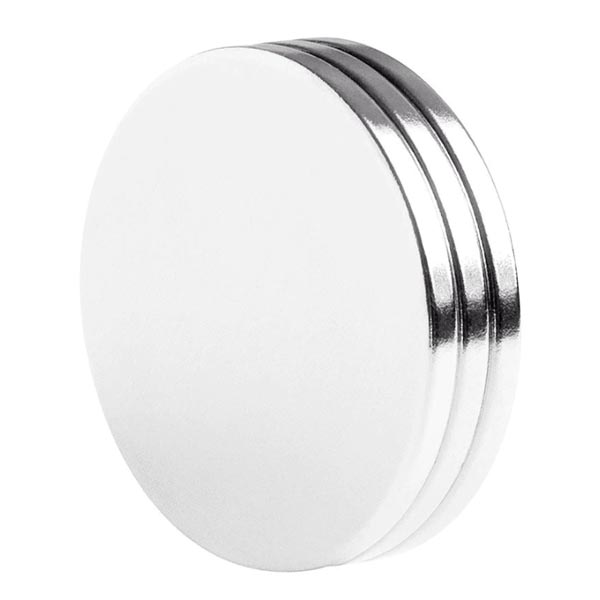
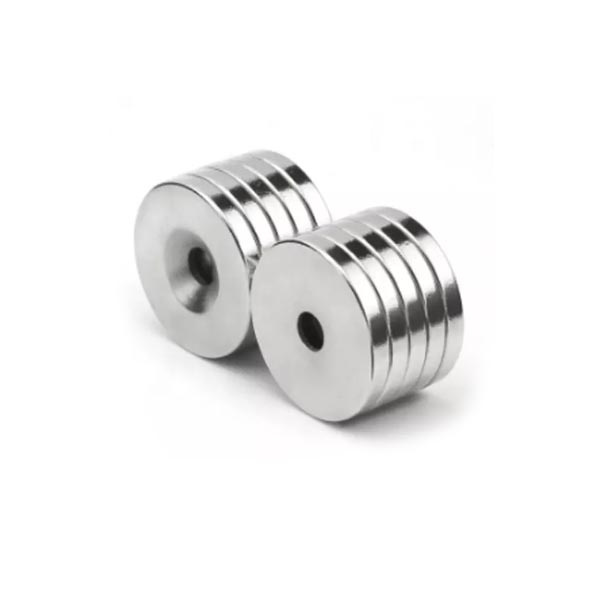
The same nickel coating is widely applied to other shapes; for example, neodymium disc magnets used in holding applications benefit from the same durable surface.
However, zinc is less hard than nickel. For cylinder magnets that experience sliding contact or repeated abrasion, zinc may wear through faster. We typically recommend zinc for static applications or where the magnet is fully encapsulated.
Epoxy Coating – Chemical and Moisture Resistance
For demanding environments like high humidity, salt spray, cleaning chemicals, or outdoor weather, epoxy coating is the preferred option. This polymer creates a thick, hard shell around the magnet. The typical color of epoxy is black, but other colors can also be achieved.
Corrosion resistance: Excellent (often exceeds 100 hours salt spray)
Hardness: High, but can be slightly softer than nickel
Chemical resistance: Excellent against many oils, solvents, and mild acids
Typical thickness: 15–40 microns
Best for: Outdoor equipment, marine applications, automotive underbody, chemical plants, food processing (with appropriate certifications)
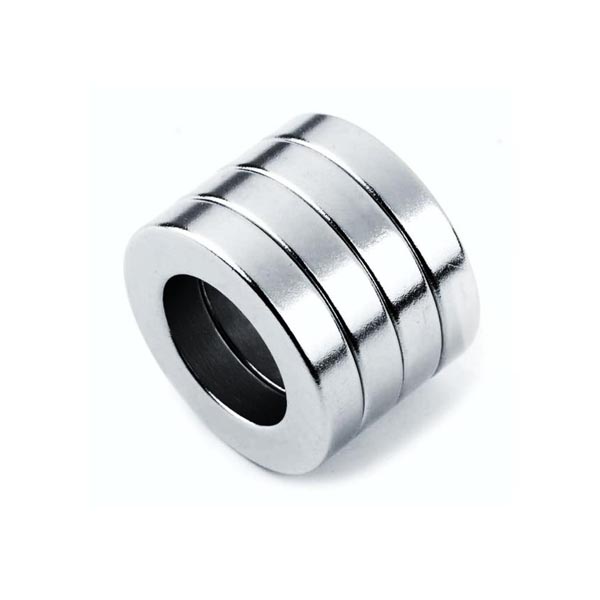
For applications requiring a central hole – such as in magnetic couplings or rotating shafts – the same epoxy protection is available for neodymium ring magnets.
One nuance: epoxy adds more thickness than nickel or zinc. If your cylinder magnet must fit into a tight tolerance bore, you must account for the coating thickness in your drawing. We often adjust the substrate size to meet your final dimension after epoxy coating.
Other Specialized Coatings
Beyond the three main types, some projects call for specialty coatings:
Passivation: A very thin chemical treatment that offers minimal protection. Only for extremely dry, clean-room environments where no moisture is present.
Gold (Au) coating: Used for medical or high-end cosmetic applications. Gold over nickel provides excellent corrosion resistance and a distinctive appearance, but at a high cost.
PTFE (Teflon‑like): Reduces friction. Useful for cylinder magnets that slide against a surface.
Parylene: A vacuum-deposited polymer that is ultra-thin and completely conformal. Used in medical implants and MEMS devices.
For 95% of industrial customers, nickel, zinc, or epoxy will be the right answer.
How to Choose the Right Coating for Your Application
We tell our clients at Fullzen Technology to answer three questions before selecting a coating.
Industrial Environments
Dry factory floor: Nickel coating is sufficient and cost-effective.
Outdoor or high humidity: Choose epoxy. The extra salt spray resistance pays for itself by avoiding premature returns.
Chemical exposure: Epoxy. Verify compatibility with the specific chemical.
Food or pharmaceutical: Consider epoxy with relevant food-contact approvals, or use a fully sealed assembly.
Electronic Devices
For consumer electronics or precision instruments, nickel coating is the default. It looks clean, resists handling corrosion, and is non‑shedding. If the magnet sits near a radio frequency (RF) circuit or a sensitive analog sensor, we advise confirming that the conductive nickel layer does not interfere. In rare cases, a thin non-conductive coating (parylene or a proprietary polymer) may be specified.
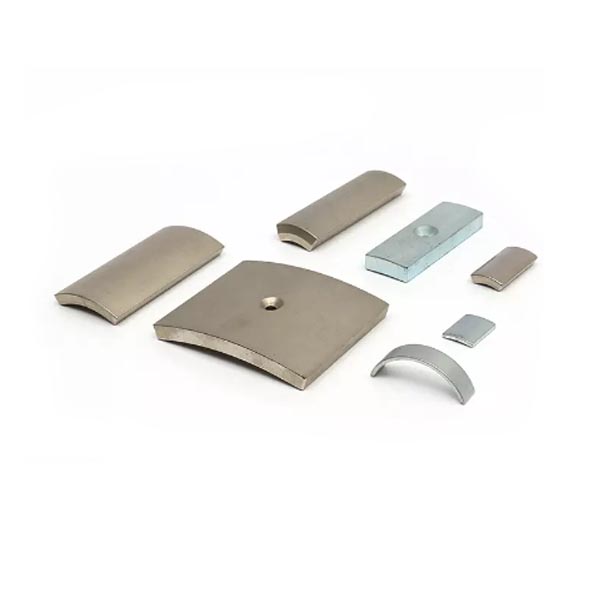
If your device requires a non‑standard dimension, an unusual coating thickness, or a specific grade of magnet, you can work directly with our engineers on custom neodymium magnets that match your electrical and mechanical constraints exactly.
Customized Requirements with Fullzen Technology
Sometimes, off-the-shelf coated magnets do not fit your design. You may need a specific outer diameter, a tighter tolerance, or a hybrid coating (e.g., nickel plus a top layer of epoxy for extra chemical resistance). This is where our engineering team steps in.
We manufacture coated neodymium cylinder magnets to your drawing. You provide:
Dimensions (diameter and length), with final tolerance after coating
Magnet grade (e.g., N35, N42, N52, or high-temperature SH)
Coating type and any special requirements (e.g., “epoxy, black, 30 microns minimum”)
Operating environment description, so we can verify our recommendation
We then produce samples. You test them. Only when you approve do we proceed to full production. This workflow eliminates guesswork.
Tips for Maintaining Coated Magnets
Even the best coating cannot survive gross mishandling. Simple practices extend the life of your nickel-coated magnets or epoxy-coated magnets.
Handling and Storage
Do not drop cylinder magnets onto hard floors. The impact can crack the coating, exposing bare metal.
Store magnets in a dry environment. While epoxy is moisture-resistant, no coating is completely immune to prolonged submersion or high-pressure steam.
Keep magnets away from sharp tools. A steel blade can scratch through nickel or zinc.
If magnets are stored for months, consider placing them in sealed bags with desiccant – especially for zinc-coated parts.
Installation and Longevity
When pressing a cylinder magnet into a housing, use a fixture that applies force evenly to the end face, not the side.
Avoid hammering or impact installation. We have seen coating failures occur during assembly, not during service.
For epoxy-coated magnets in high-vibration environments, check the coating at the edges periodically. Vibration can cause micro‑fretting against a metal housing, eventually wearing through the polymer.
Why Fullzen Technology for Coated Magnets
Choosing a supplier is as important as choosing the coating itself. Fullzen Technology brings direct factory experience to your project. We are not a trading company reading a datasheet; we are the manufacturer who controls the sintering, grinding, coating, and inspection.
What we offer specifically for coated neodymium cylinder magnets:
Technical expertise: Our engineers work with you to match coating to environment. We do not simply ask “which color”; we ask “which temperature, which humidity, which chemicals.”
Custom manufacturing: From N35 to N45SH, from 2mm diameter to 50mm, from nickel to epoxy – we build to your drawing.
Quality assurance: Routine salt spray tests, coating thickness checks (eddy current method), and visual inspection under magnification.
Fast sampling: We can produce coated samples in 10–15 working days for most specifications.
Global shipping: We export to over 30 countries, with proper packaging to prevent transit damage.
When you work with us, you get a partner who understands that a corrosion-resistant magnet is not a commodity – it is an engineered component.
Ready to Specify Your Coated Cylinder Magnets?
Stop guessing which coating works for your environment. Start with a clear requirement: send us your drawing, your application notes, and your quantity estimate. We will reply with a coating recommendation, a sample plan, and a competitive quote.
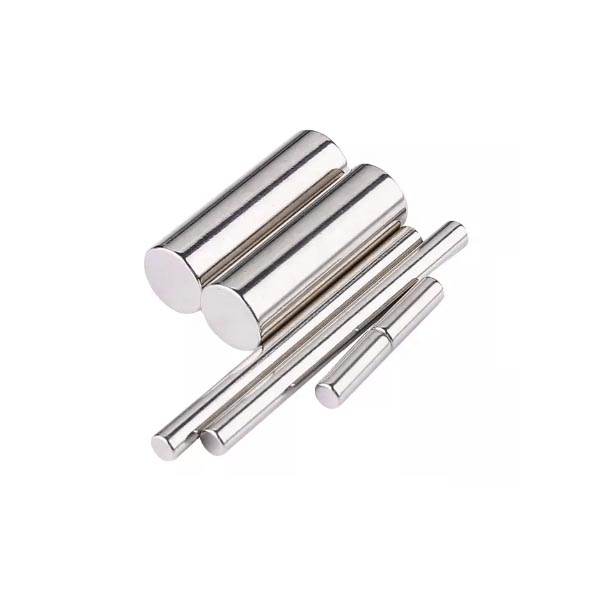
Visit our main product page for neodymium cylinder magnets to learn more, or contact Fullzen Technology directly to begin your custom project.
Your Custom Neodymium Magnets Project
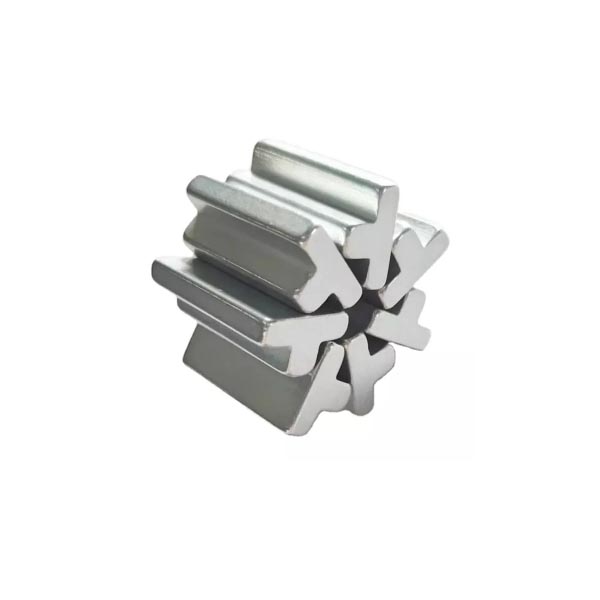
We can offer the OEM/ODM services of our products. The product can be customized according to your personalized requirements, including the size, Shape, performance, and coating. please offer your design documents or tell us your ideas and our R&D team will do the rest.
Other Types of Magnets



Post time: May-10-2026