
As a professional magnet supplier, Fullzen Technology partners with design engineers, OEM factories and purchasing departments to refine magnetic solutions for diverse industrial scenarios. The grade of neodymium magnets plays a key role in overall pull force, heat resistance, production expenses and product service life. When picking from N35, N42 and N52, the goal is never just to pursue maximum magnetism. Instead, teams need to strike a proper balance between performance, temperature tolerance, assembly needs and project budgets.
Key Takeaways
N35 is suitable for standard industrial holding applications
N42 offers balanced performance for motors and sensors
N52 provides maximum magnetic force in compact spaces
Temperature resistance is critical in long-term applications
Proper magnet measurement improves reliability and consistency
Fullzen Technology is a professional maker of industrial neodymium magnets. We provide clients across the globe with technical consulting, material recommendations and custom magnetic solutions, catering to motors, automation devices, sensors, adhesive neodymium magnets and compact electronic assemblies.
We break down the testing methods for permanent magnet properties, alongside a detailed comparison of N35, N42 and N52 neodymium magnets. We evaluate them across magnetic power, heat tolerance, pricing and real industrial usage scenarios. You will also learn how engineering staff and OEM purchasers pick the most suitable grade for motors, sensors, holding fixtures and mini magnetic assemblies.
What Do Neodymium Magnet Grades Mean?
Each grade assigned to neodymium magnets reflects the overall performance of these permanent magnets. Classification is based on key material properties: maximum energy product, residual flux density, coercive force and heat resistance. A solid grasp of these traits allows engineering teams to pick suitable magnets for industrial settings, where stable performance and dependable operation are always prioritized.
Understanding the “N” Rating
The “N” value in neodymium magnets refers to the maximum energy product measured in Mega Gauss Oersteds (MGOe). Higher numbers generally indicate stronger magnetic performance.
For example:
N35 magnets provide moderate magnetic strength with lower cost
N42 magnets offer balanced performance for industrial systems
N52 magnets deliver extremely high magnetic force in compact designs
However, stronger magnets are not always the best solution for every application.
How Magnetic Energy Product Is Measured
Magnetic energy product, commonly written as BHmax, represents the amount of magnetic energy stored within the material. Engineers measure this value using hysteresis loop testing equipment under controlled laboratory conditions.
Several key magnetic properties are evaluated:
- Residual induction (Br)
- Coercive force (Hcb)
- Intrinsic coercivity (Hcj)
- Maximum energy product (BHmax)
These measurements determine how magnets behave under load, temperature changes, and external magnetic fields.
Why Higher Grade Does Not Always Mean Better
Many buyers assume N52 magnets are automatically superior because they generate stronger magnetic force. In reality, higher-grade magnets often come with increased material cost and reduced thermal stability.
For industrial applications involving elevated temperatures or large assemblies, N42 or even N35 magnets may provide better long-term reliability and lower production costs.
N35 vs N42 vs N52: Technical Comparison Table
The table below summarizes the key differences across three common neodymium grades. These values are typical for standard (no temperature suffix) materials at 20°C.

When Should You Choose N35 Magnets?
N35 magnets remain widely used because they provide reliable magnetic performance at a competitive cost.
Standard Industrial Holding Applications
N35 magnets are commonly used in:
- Magnetic fixtures
- Holding brackets
- Packaging systems
- Display assemblies
- Adhesive neodymium magnets for mounting applications
Their moderate magnetic strength is sufficient for many industrial environments.
Cost-Sensitive OEM Projects
For large-volume manufacturing projects, controlling material cost is critical. N35 magnets help reduce production expenses while maintaining acceptable magnetic performance.
Many OEM buyers choose N35 for products where ultra-high pull force is unnecessary.
Large Magnetic Assemblies
In larger assemblies, increasing magnet size is often more economical than upgrading to higher-grade materials. This approach improves cost efficiency without sacrificing functionality.
Why N42 Magnets Are Popular in Motors and Sensors
N42 magnets are widely considered one of the most balanced neodymium grades available today.
Balance Between Strength and Cost
N42 magnets provide stronger magnetic performance than N35 while remaining more affordable and thermally stable than N52.
For many industrial systems, this balance makes N42 the preferred engineering choice.
Applications in Brushless Motors
Brushless DC motors frequently use the n42 neodymium disc magnet because it delivers stable magnetic flux density and reliable rotational efficiency.
Typical applications include:
- Electric motors
- Cooling fans
- Robotics
- Industrial automation equipment
Sensor and Automation Systems
Sensors require consistent magnetic fields for accurate signal detection. N42 magnets provide dependable performance in automation systems exposed to vibration and continuous operation.
When N52 Magnets Become the Best Choice
N52 magnets are designed for applications where maximum magnetic force is required within limited installation space.
Compact Electronic Devices
Modern electronic products continue to shrink in size while demanding stronger magnetic performance. N52 magnets help engineers achieve compact designs without sacrificing holding force.
Space-Constrained Magnetic Designs
In applications where installation space is extremely limited, n52 neodymium disc magnets allow designers to reduce magnet dimensions while maintaining strong magnetic output.
Common examples include:
- Medical devices
- Miniature speakers
- Precision instruments
- Compact actuators
High Pull Force Requirements
N52 magnets are often selected for applications requiring maximum pull force, especially where lightweight structures are important.
However, engineers must carefully evaluate thermal conditions because high-grade magnets can lose performance at elevated temperatures.
Temperature Resistance and Demagnetization Risks
Temperature is one of the most important factors affecting permanent magnet performance.
Standard vs SH vs UH Grades
Neodymium magnets are available in multiple temperature-resistant grades:
- Standard Grade: up to 80°C
- SH Grade: up to 150°C
- UH Grade: up to 180°C
Higher-temperature grades improve resistance to irreversible demagnetization.
Temperature Derating Curves
As temperature increases, magnetic flux density gradually decreases. Engineers often use temperature derating curves to predict magnetic performance under operating conditions.
Including thermal analysis during product development helps prevent long-term magnetic failure.
How Heat Affects Magnetic Strength
Excessive heat can permanently damage neodymium magnets by disrupting their internal magnetic structure.
Applications involving motors, generators, or enclosed electronic systems should always consider:
- Heat buildup
- Ventilation
- Thermal cycling
- Magnetic aging
Engineering diagrams showing temperature derating behavior are highly recommended for technical documentation.
Disc vs Cylinder vs Ring Magnets for Different Designs
Magnet shape significantly affects magnetic field distribution and assembly performance.
Disc Magnets for Flat Mounting
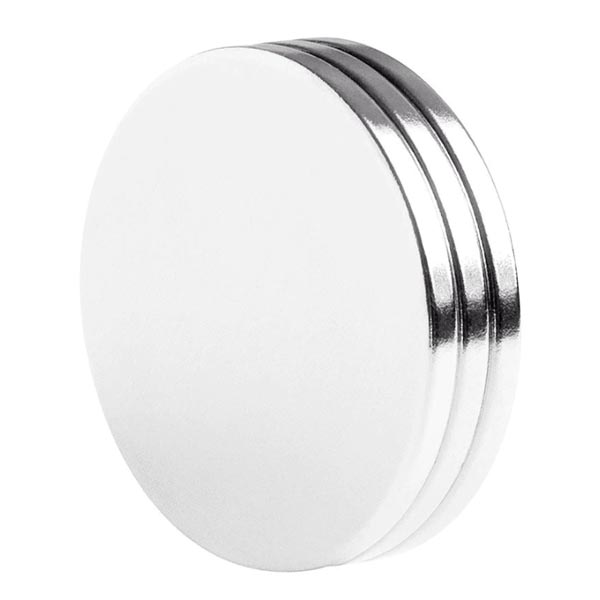
Disc magnets are commonly used in compact assemblies where flat mounting surfaces are required.
They are widely applied in:
- Sensors
- Closures
- Consumer electronics
- Adhesive mounting systems
Cylinder Magnets for Deep Magnetic Fields
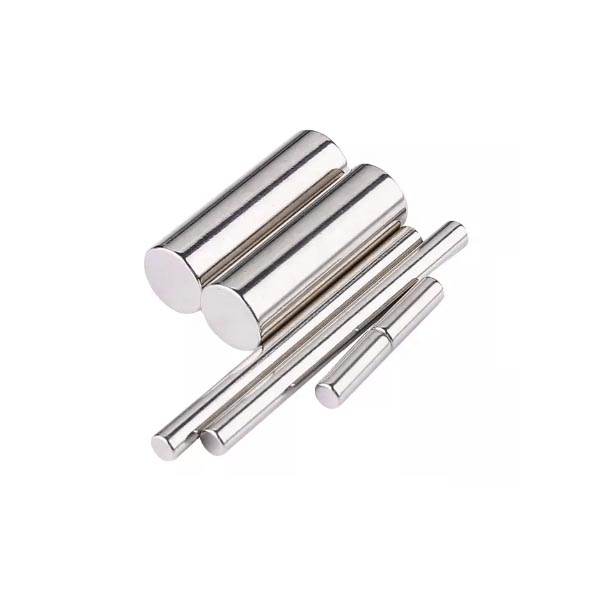
In applications requiring deeper magnetic penetration, many engineers prefer neodymium cylinder magnets due to their concentrated axial magnetic field.
These magnets are commonly used in:
- Industrial sensors
- Solenoid systems
- Magnetic separators
Ring Magnets for Rotational Systems
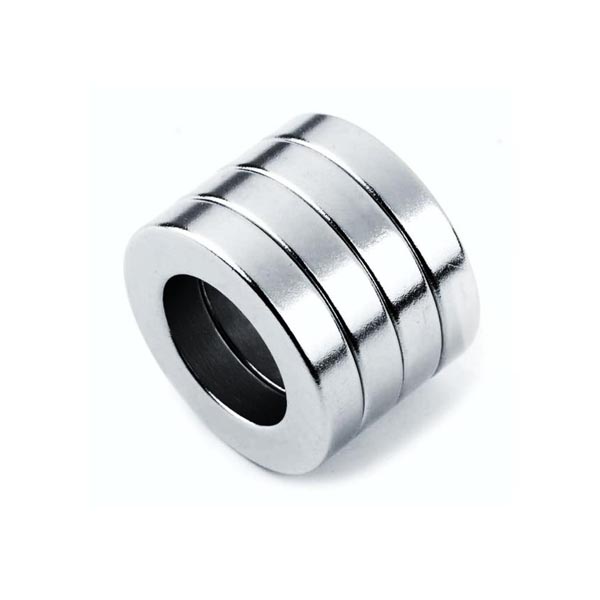
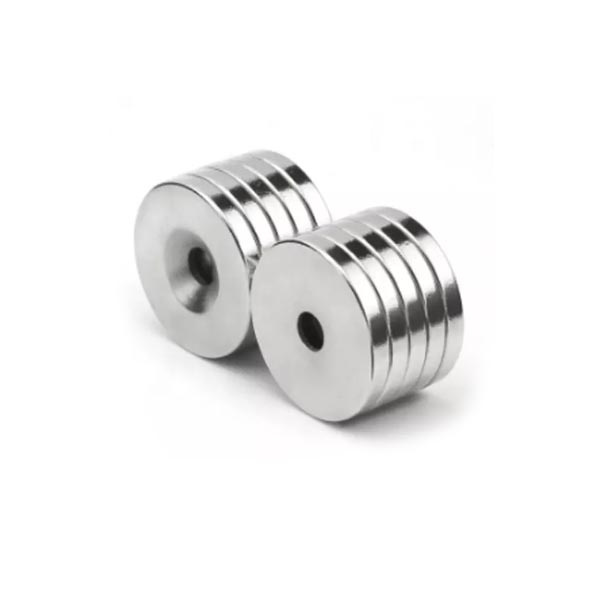
For rotational systems and motor assemblies, neodymium ring magnets are commonly used because they allow shafts or bearings to pass through the center.
Typical applications include:
- Electric motors
- Magnetic couplings
- Rotational encoders
How We Help OEM Customers Select the Right Magnet Grade
At Fullzen Technology, we understand that selecting the correct magnet involves more than comparing magnetic strength values.
Application Analysis
Our engineering team evaluates:
- Operating temperature
- Mechanical stress
- Installation space
- Magnetic field requirements
- Environmental exposure
This helps customers avoid overdesign and unnecessary material costs.
Coating and Tolerance Recommendations
Different industrial environments require different protective coatings, including:
- Nickel coating
- Epoxy coating
- Zinc coating
- Gold plating
We also provide precision tolerance recommendations for automated assembly systems.
Custom Magnet Manufacturing Support
For complex industrial projects, many OEM customers require custom neodymium magnet solutions with specific coatings, tolerances, and magnetization directions.
Fullzen Technology supports OEM buyers with customized magnetic assemblies, engineering consultation, and stable mass production capabilities.
Frequently Asked Questions
Is N52 always stronger than N42?
Yes, N52 magnets generally provide stronger magnetic force. However, N42 magnets often offer better thermal stability and lower cost for industrial applications.
What is the best neodymium magnet grade?
There is no universal “best” grade. The ideal choice depends on operating temperature, installation space, magnetic requirements, and budget.
Are N52 magnets more expensive?
Yes. N52 magnets typically cost more because they require higher-performance magnetic materials and tighter manufacturing control.
Which magnet grade works best in motors?
N42 is a go-to choice for motor applications. It delivers great magnetic performance, stands up well against heat, and stays budget-friendly all at once.
What happens if neodymium magnets overheat?
Too much heat is bad news for neodymium magnets — it leads to permanent demagnetization. Once their magnetic strength fades from overheating, there’s no way to restore it. If your devices operate in high-heat settings, pick high-temperature grades such as SH or UH for better durability.
Your Custom Neodymium Magnets Project
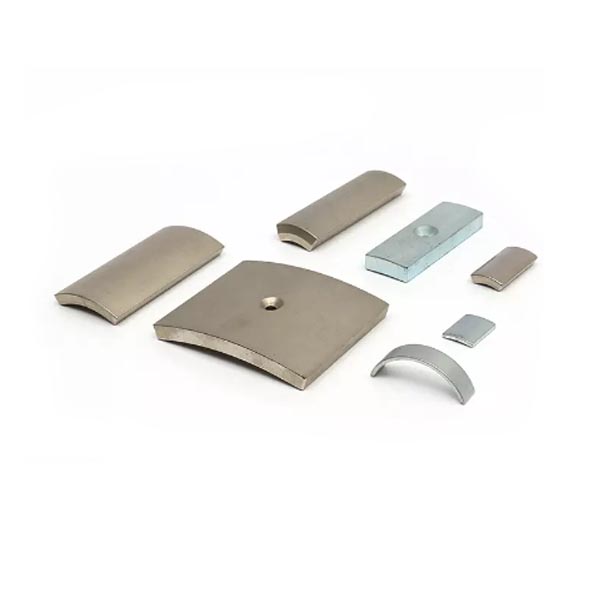
We can offer the OEM/ODM services of our products. The product can be customized according to your personalized requirements, including the size, Shape, performance, and coating. please offer your design documents or tell us your ideas and our R&D team will do the rest.
Other Types of Magnets



Post time: May-29-2026