
Neodymium Ring Magnet Grades Explained
I've lost count of how many times I've seen good projects go sideways because someone messed up the magnet specs. Parts show up, you open the box, and—nope. Wrong magnetization. Dimensions don't fit. Coating's peeling. Now you're looking at a six-week delay and an unhappy production manager.
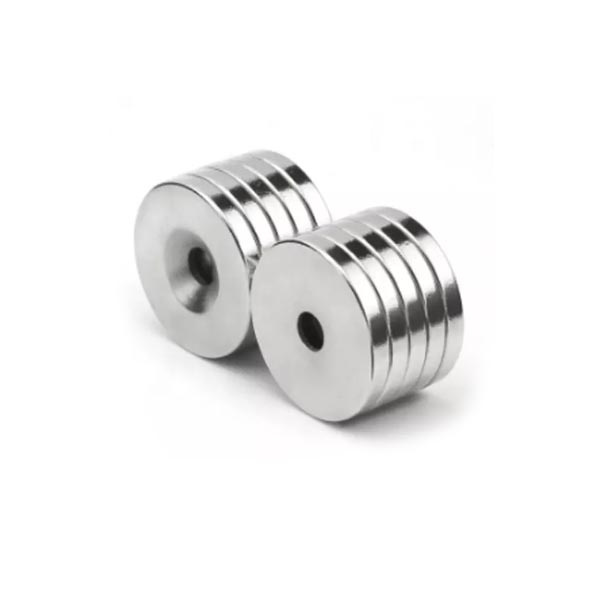
Custom **Neodymium Ring Magnets** aren't like buying screws. They're precision components. Get the specs right and everything works. Get them wrong and you learn expensive lessons.
Why Ring Magnet Specifications Matter for OEM Manufacturing
Custom Neodymium Magnets are incredibly strong, but they're also brittle, rust-prone, and temperature-sensitive. A fraction of a millimeter off on the inner diameter? Your rotor won't slide through. Forgot to specify the environment? Six months from now those magnets could be red dust inside your assembly.
Build-to-Print Manufacturing Model
Top-tier suppliers operate on a simple principle: they make what's on your print, period. Build-to-print means exactly that—N42 grade means N42 grade, axial magnetization means axial, ±0.1mm means ±0.1mm. No interpretation, no deviation, no surprises.
This works great when your documentation is complete. But if your drawing misses something critical, the manufacturer won't guess. They'll stop production and ask. That email exchange takes days. Rescheduling takes weeks. Suddenly your six-week lead time turns into ten weeks.
Why Incomplete Specifications Delay Production
I've seen the same mistakes repeat across dozens of projects:
- Missing tolerances: You write "OD 25mm." The shop uses their standard ±0.1mm. Your assembly needs ±0.02mm. Nothing fits.
- No magnetization direction: They guess axial. You needed radial. Scrap metal.
- Vague temperature requirements:"High temperature" means different things to different people. Be specific.
Every unclear spec is a potential production stop. And production stops cost money.
Key Dimensions for Neodymium Ring Magnets
Outer Diameter (OD)
How wide your neodymium ring magnet is. This determines whether your magnet fits into the housing or assembly you've designed. Even 0.1mm can turn a precision fit into a loose rattle.
What to specify: Be explicit. "OD: 50mm measured at the midpoint of the magnet thickness" eliminates ambiguity.
Inner Diameter (ID)
The hole size, too small and your shaft won't go through. Too large and the magnet wobbles, which in rotating applications causes imbalance and premature wear.
For press-fit assemblies—where you're pressing the magnet onto a shaft—this dimension gets critical. We're talking ±0.02mm tolerances to ensure the magnet stays put without cracking during assembly.
Magnet Thickness
How tall the ring is. Thickness directly affects magnetic performance. A thinner magnet has lower pull force and is more prone to cracking. A thicker one gives you more magnetic muscle but adds weight and cost.
There's no single "correct" thickness for every application. The right choice balances your available space against the magnetic force your design requires.
What different tolerances cost:
- ±0.1mm: Standard. No extra cost. Fine for non-critical fits.
- ±0.05mm: Moderate. Adds 10-15%. Used for most mechanical assemblies.
- ±0.02mm: High precision. Adds 25-40%. Required for press-fits and precision instruments.
- ±0.01mm: Ultra precision. Adds 50%+. Only for demanding applications like medical devices.
If you don't specify tolerances, manufacturers use industry defaults—which might not match your needs.
Choosing the Right Magnet Grade
Neodymium grades look like alphabet soup—N35, N42SH, N52UH—but they tell you magnetic strength and temperature capability.
Standard Grades (N35–N55)
The number after N is the maximum energy product in MGOe. Higher number = stronger magnetic field.
- N35: Entry level. Cheap, reliable for basic applications.
- N42: The sweet spot. Most common industrial grade.
- N45-N48: High performance. Used where space is tight but you need serious holding force.
- N50-N52: Maximum strength. Very brittle, expensive, incredibly strong.
- N54: Rare, extremely brittle. Only when nothing else works.
Here's the catch: stronger also means more brittle. That N52 ring magnet? Drop it once during assembly and it'll crack clean in half. Sometimes a slightly larger N42 makes more sense than a tiny N52—similar performance with way less breakage.
High Temperature Grades (SH / UH)
Standard neodymium magnets quit working above 80°C (176°F). Push past that and they lose their magnetism for good. Engine compartment? Industrial oven? You need high-temp grades—SH, UH, or EH. They cost 20-40% more. Cheap insurance compared to replacing an entire batch of dead magnets.
How Grade Affects Magnetic Performance
Maximum energy product: Higher grade = stronger magnetic field in the same physical size.
Resilience: The magnet's resistance to demagnetization. High-temp grades have significantly higher coercivity.
Aoercivity coefficient: Neodymium magnets lose about 0.12% of their strength for every degree Celsius above room temperature. At 80°C, an N42 magnet might only deliver 85% of its rated pull force.
Match the grade to your actual needs. Over-specifying wastes money. Under-specifying guarantees failure.
Surface Coating Options for Ring Magnets
Uncomfortable truth: neodymium magnets are about 65% iron. Iron + oxygen + moisture = rust. Fast.
Coatings aren't optional—they're the only thing standing between your magnet and corrosion.
Nickel (NiCuNi)
The industry standard. Three layers—nickel, copper, nickel. Shiny, tough, handles moderate humidity.
Good for: Most industrial and electronics applications. Dry to moderately humid environments.
Limitation:Not for prolonged outdoor use or marine environments. Salt spray will eventually find its way through.
Epoxy Coating
Thick, black, matte finish. Creates an airtight barrier around the magnet.
Good for: Marine environments, chemical exposure, outdoor gear, anything wet. If your magnet will see moisture, go epoxy.
Trade-off: Less scratch-resistant than nickel. Can chip under impact. But for corrosion protection, nothing beats it.
Zinc and Other Coatings
Zinc: Cheap, basic protection. Fine for dry indoor stuff. Skip it if there's any moisture.
Gold plating: Suitable for medical equipment with stringent material requirements. Although expensive, it is sometimes essential.
Magnetization Direction for Ring Magnets
This is where even experienced engineers get tripped up.
Magnetization direction determines where the north and south poles are located. Get this wrong, and you can't fix it later—once magnetized, that's it.
Axial Magnetization
Magnetized through the thickness—one flat face is north, the other south.
Good for: Sensors, speaker drivers, holding applications where the magnet sits flat against a metal surface.
Cost: Most economical. Default for general-purpose applications.
Radial Magnetization
Magnetized across the diameter—outer surface one pole, inner surface the opposite pole.
Good for: Any application needing magnetic force along the circular axis.
Critical: You cannot retrofit radial magnetization to an axially magnetized magnet. If you need radial, specify it clearly.
Cost: More expensive than axial. Requires specialized equipment.
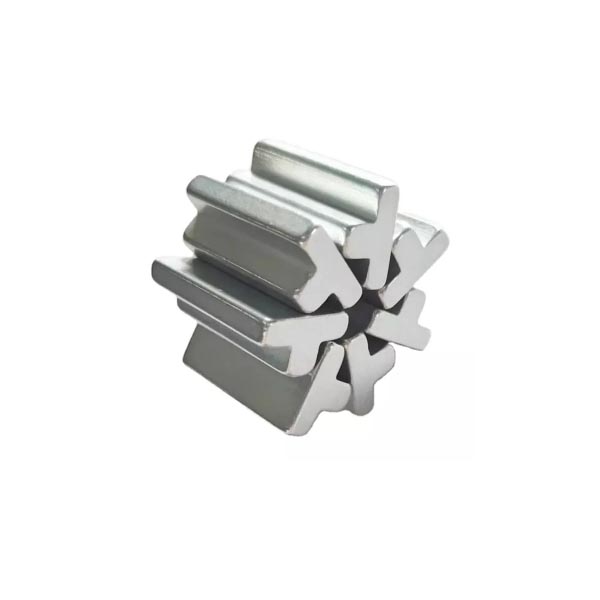
Multi-pole Magnetization
Multiple north and south poles spaced evenly around the ring.
Good for: Rotary encoders, position sensors, high-precision motors, speed measurement.
Cost: Most complex and expensive. Requires custom tooling and precise pole spacing.
What to specify: Be explicit. "8-pole radial magnetization, alternating N/S on OD, 45° pole spacing." Leave no room for interpretation.
Other Information Manufacturers Need
Working Temperature
Not just the maximum—the whole range.
- Hot: Above 80°C, standard grades demagnetize.
- Cold: Below -40°C, magnets become brittle and can crack.
- Thermal cycling: Repeated hot-cold cycles can cause coatings to crack or peel.
What to provide: "-20°C to 120°C, continuous operation" is infinitely better than "high temperature."
Application Environment
Tell them where this magnet lives.
- Indoor/dry: Zinc or nickel is fine
- Outdoor/humid: Epoxy required
- Marine/salt water: Epoxy, full stop
- Chemical exposure: Epoxy or specialized coatings
- High vibration: Consider lower grade for toughness
- Mechanical shock: Avoid N52—too brittle
- Medical: Biocompatible coatings
I've seen marine magnets with nickel coating fail in six months. The manufacturer never knew they'd be on a boat. Don't hide this information.
Order Quantity (MOQ)
Custom manufacturing requires setup costs spread across your order quantity.
Ask about MOQs upfront. If you need fewer, ask about modified stock designs—they're often cheaper and faster.
Submitting Specifications to a Ring Magnet Manufacturer
Provide Detailed Engineering Drawings
This is your blueprint.
What to include:
- All dimensions (OD, ID, thickness) with tolerances
- Magnetization direction clearly marked with arrows and pole indicators
- Any special features (chamfers, fillets, mounting holes)
- Date and revision number
Format: CAD files (DWG, DXF) or high-resolution PDFs. No hand sketches—too easy to misinterpret.
Provide a Comprehensive Specification Sheet
A written document covering everything that doesn't fit on the drawing.
What to include:
- Magnet grade
- Coating type and color
- Working temperature range
- Application environment details
- Order quantity
- Any performance requirements
Format: One page, clear, organized.
Confirm a Physical Sample Before Full Production
If you remember nothing else: never skip sample approval.
Order 3-5 prototype pieces. Test them in your actual assembly. Not a mock-up. The real thing.
What to test:
- Physical fit
- Magnetic performance
- Coating adhesion
- Any defects
- Performance at operating temperature
Only after the samples work perfectly do you approve full production.
Ready to Start Your Custom Neodymium Magnet Project?
Here's the bottom line: precision in specification leads to precision in production. Get these details right, and your Neodymium Ring Magnets will show up exactly as designed—ready to drop into your assembly and perform for years.
We've covered what matters:
- Dimensions with realistic tolerances
- Grades matched to your temperature needs
- Coatings that survive your environment
- Magnetization direction that matches your application
- Working temperature, environment, and quantity clearly stated
- Drawings, spec sheets, and samples that eliminate guesswork
Here's how we work at Fullzen Magnet: you tell us exactly what you need in your Custom Neodymium Magnets, and that's what we build. No shortcuts, no substitutions. We'll go back and forth on the specs, get the drawings right, run prototypes to make sure everything works, and then ramp up production.
When you order Custom Neodymium Magnets from Courage Magnet, you're getting exactly what you asked for. We sit down with your team, hammer out the details, put together proper drawings, and run prototypes to catch any issues before production starts. Simple.
Your Custom Neodymium Magnets Project
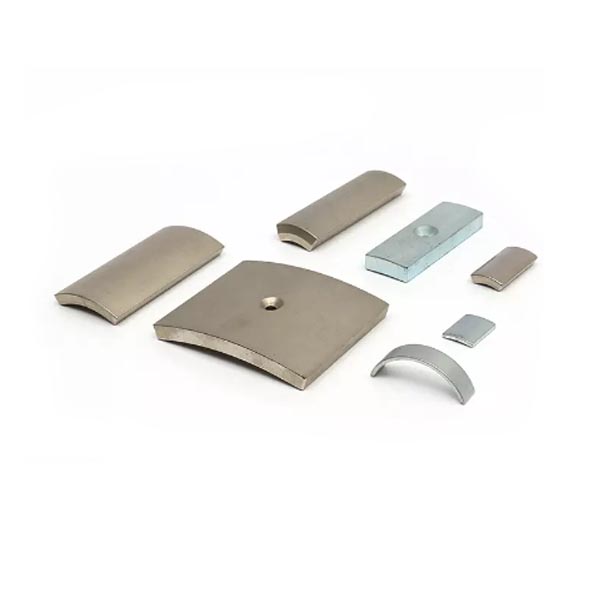
We can offer the OEM/ODM services of our products. The product can be customized according to your personalized requirements, including the size, Shape, performance, and coating. please offer your design documents or tell us your ideas and our R&D team will do the rest.
Other Types of Magnets



Post time: Mar-19-2026