
Key Specifications to Confirm Before Ordering
Here's a conversation I had last month with a buyer who called me frustrated. "The rings came in, but they don't slide onto the shaft." I asked for his drawing. He'd specified the inner diameter at 10 mm. The shaft was 10 mm. No tolerance. No mention of coating thickness. The rings he received had 20 microns of nickel on every surface, including the inside hole. That 10 mm ID became 9.96 mm. Nothing fit. That's why you confirm specs before you order, not after.
Dimensions and Tolerance
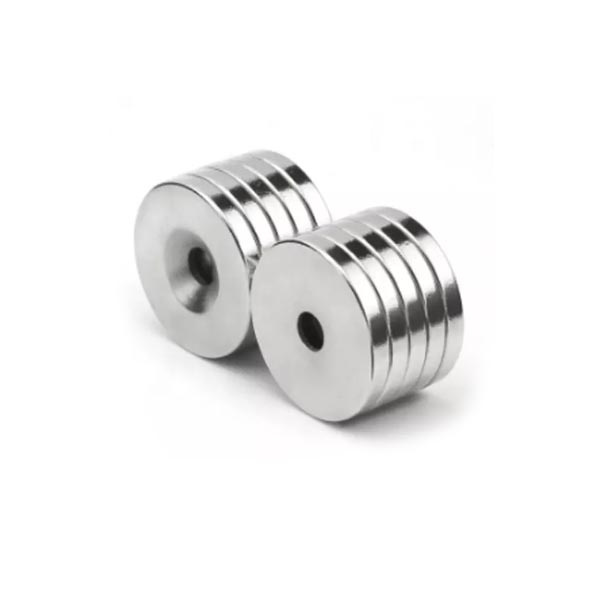
Ring magnets have three numbers that matter: outer diameter (OD), inner diameter (ID), and thickness. But the number on the drawing is never the whole story. Tolerance is what makes it real. A drawing that says "ID: 10 mm" is incomplete. A drawing that says "ID: 10 mm +0.05/-0.00" tells the shop something useful. It's crucial to confirm the ring magnet dimensions and tolerances to ensure proper fitting in your system.
When you order Neodymium Ring Magnets, always ask yourself: what's the worst fit I can accept? If the ID is too small, the ring won't go on. If it's too large, the ring wobbles. For press-fit applications, some buyers ask for the inner hole to be masked during coating. That means the bare metal stays exposed on the inside. No coating thickness to mess up the fit. We've done this for customers who needed exact clearance on stainless steel shafts. It works, but you have to ask for it upfront.
Magnetization Direction
This one trips people up all the time. A ring magnet can be magnetized in two main ways: axial (north on one flat face, south on the other) or diametric (north on one side of the ring, south on the opposite side). They look identical on the outside. But if you order axial when you need diametric, your assembly won't work.
I remember a customer who built a magnetic coupling for a pump. He ordered rings without specifying magnetization. The default is usually axial. He needed diametric. The rings showed up, he put them in the coupling, and nothing happened. No torque transfer at all. He had to scrap the whole batch and reorder with the correct magnetization direction of ring magnets clearly written on the drawing. That mistake cost him three weeks and a rush shipping fee.
Material Grades
Everyone wants N52 because the number is big. But here's what the catalog doesn't tell you. Higher grade means more brittle. N52 magnets crack and chip easier than N42. For a ring magnet that gets dropped or banged around, N42 might last longer even though it's technically weaker.
I had a client in an auto shop insist on N52 for magnetic sweeps they built. Within a month, they had rings cracking from the shock of hitting pavement. We swapped them to N42 rings — slightly larger to make up the pull force — and the breakage stopped. The lesson? Pick the grade that matches your real use, not just the spec sheet. Temperature matters too. Standard grades start losing strength above 80°C. If your rings sit near an engine or a welding bench, you need high-temp material. The price hurts, but not as much as replacing a whole batch.
What Buyers Should Know About Coatings
A bare neodymium ring magnet rusts fast. Leave one on a damp bench overnight, and you'll see orange spots by morning. That's why coatings exist. But not every coating works for every job.
Types of Coatings
You've got three main choices. Nickel is the standard. It's a triple layer — nickel, copper, nickel — that gives good corrosion resistance for indoor use. It's hard, shiny, and takes everyday handling fine. Epoxy is tougher. Usually black or dark gray, baked on. It handles chemicals and moisture better than nickel. I've seen epoxy rings survive months in coolant tanks. Zinc is the budget pick. Thin, cheap, and only good for dry environments. Scratch it, and rust starts underneath.
For outdoor or marine use, skip nickel. Salt water eats through it. Go epoxy or look into specialty coatings like Parylene — expensive but bulletproof. For most shop and factory applications, nickel works fine. For wet or chemical-heavy environments, epoxy is the safer bet.
Coating Impact on Durability
Here's something buyers don't think about. Coating thickness changes the magnet's dimensions. A ring with 30 microns of epoxy on all surfaces has an ID that's 0.06 mm smaller than the bare magnet. That can break a press fit. Also, coatings can chip. Nickel chips leave a bare spot that rusts quickly. Epoxy chips less but is softer. Zinc chips easily but is so thin that the rust spreads fast anyway.
We test coatings by doing stupid things to samples. Drop them on concrete. Leave them in a cup of salt water for a week. Scratch them with a screwdriver. If a coating fails those tests, it's not ready for your shop floor. Ask your supplier what tests they run. If they can't tell you, walk away.
MOQ and Lead Time
Custom ring magnets are not off-the-shelf parts. You can't order 50 pieces and expect them next Tuesday. The numbers are bigger and the wait is longer than most people think.
What is the MOQ for Custom Ring Magnets?
Minimum order quantity depends on how custom your rings are. Changing the OD, ID, or thickness means new tooling. That tooling cost gets spread across the batch. Most good shops want 2,000 to 5,000 pieces for a true custom ring. If you're using a standard size but want a special coating, MOQ might be lower — maybe 500 to 1,000 pieces. If you need something really odd, like a non-standard hole shape or an unusual coating, MOQ jumps to 10,000 or more.
I've had buyers try to order 100 custom rings and get offended when the price per piece was ten times higher than catalog pricing. That's just how the math works. Tooling and setup cost the same whether you make 100 or 10,000. Spread that cost over more parts, and each one gets cheaper.
Lead Time for Custom Orders
Lead time is where things get painful. For custom custom neodymium magnets, here's a realistic timeline. One to two weeks for material sourcing and cutting blanks. Another one to two weeks for machining the ring shape — that's drilling or grinding the inner hole, which is slow and precise. Then coating adds one to two weeks depending on type. Nickel is fastest. Epoxy adds time because of curing. Finally, magnetization and inspection take a few days.
Total? Four to eight weeks is normal. I've seen rush orders come in three weeks, but you pay extra and you stress everyone out. Always add a buffer. If you need rings by a certain date, order two months earlier than you think.
How to Communicate with Manufacturers
The biggest problems I've seen don't come from bad magnets. They come from bad communication. A drawing with missing information. A verbal "just make it like last time" when last time was two years ago. An email that says "standard coating" without defining what standard means.
Specification Confirmation
Before you place an order, send a drawing or a written spec sheet. It should include: OD with tolerance, ID with tolerance, thickness with tolerance, material grade, magnetization direction (axial or diametric), coating type and thickness, and any masking requirements (like leaving the inner hole uncoated). Then ask the manufacturer to send back a confirmation drawing. Don't assume they understood. Make them prove it.
I learned this after a batch of rings came in magnetized backwards — north and south swapped compared to the customer's assembly. The drawing was right. The shop misread it. Now I always ask for a signed drawing back before production starts.
Quality Control and Testing
Ask your supplier what QC they run. The good ones do batch sampling. They pull random rings from each batch and check dimensions with calipers or micrometers. They test pull force on a sample. They do coating thickness checks. For coatings, ask for salt spray test results. 24 hours is weak. 48 to 72 hours is better.
If a supplier says "we've never had a complaint" but can't tell you their actual QC process, that's a red flag. Every good shop has a process. They should be able to describe it in one sentence. If they can't, find another shop.
Custom Manufacturing for Neodymium Ring Magnets
The process for custom rings is straightforward if you know what to expect. It starts with your drawing. It ends with a box of magnets that should match that drawing exactly.
Build-to-Print Process
Here's how it works. You send a drawing or a 3D file. The shop reviews it and might ask questions — "Do you really need that tight of a tolerance?" or "This ID is hard to machine, can we open it up by 0.1 mm?" You agree on final specs. They make a small batch of prototypes, usually 10 to 50 pieces. You test those prototypes in your actual assembly. If they work, full production runs. If not, you go back to the drawing board.
That prototype step is not optional. I've had buyers skip it to save time, then end up with 5,000 useless rings. The prototype cost is tiny compared to a full production run gone wrong.
Final Product Delivery and QC
Before the shop ships your order, they should run a final QC check. For ring magnets, that means checking OD, ID, and thickness on a sample from each production batch. It means testing pull force against a standard. It means inspecting coating for chips, bubbles, or thin spots. Some shops send you a QC report with the shipment. Good shops do. If yours doesn't, ask for one.
When the box arrives, don't just put it on a shelf. Open it. Check a few rings with your own calipers. Test one in your assembly. I've caught mistakes this way — a batch where the coating was twice as thick as specified, or a batch where the magnetization was wrong. Catching it early means the shop can fix it. Catching it six months later means you own the problem.
Ready to order ring magnets but not sure about the specs? Talk to us. We'll walk through your drawing, your environment, and your timeline. No guesswork. Just magnets that work.
Your Custom Neodymium Magnets Project
We can offer the OEM/ODM services of our products. The product can be customized according to your personalized requirements, including the size, Shape, performance, and coating. please offer your design documents or tell us your ideas and our R&D team will do the rest.
Other Types of Magnets



Post time: Apr-10-2026