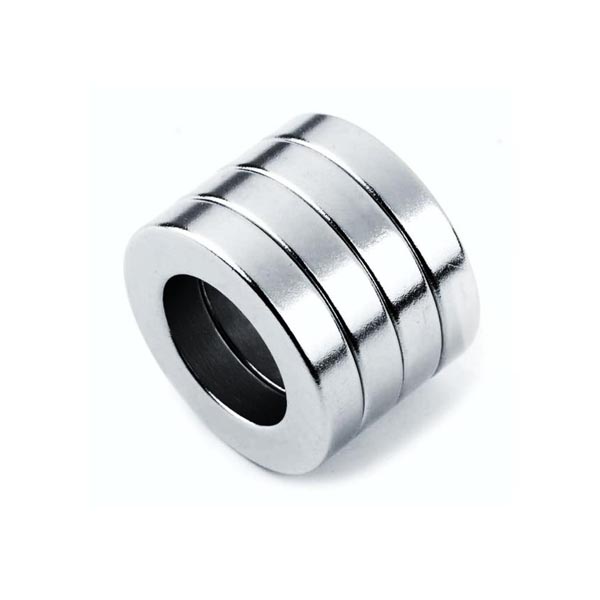
If you’ve ever worked on motor design, you already know the rotor is where things actually happen. And inside that rotor, the magnet choice can make or break performance. Neodymium ring magnets have become a go-to here—not just because they’re strong, but because their hollow structure lets them wrap around a shaft seamlessly. That central hole changes everything when you’re building compact, efficient motors. Unlike assembling multiple individual magnets, a single ring offers consistent magnetic behavior around the entire rotation. But getting the specs right? That’s where things get detailed. From magnetization direction to thermal stability, small decisions early on determine whether your motor runs smoothly for years or starts showing issues after a few hundred cycles. For teams working on OEM projects, finding custom neodymium ring magnet solutions that actually match the application isn’t just about picking a part number—it’s about understanding how that magnet will behave once it’s spinning inside your assembly.
Ring magnets bring a specific set of advantages to electric motor rotors. This piece walks through how they function, why they’re chosen over other configurations, what parameters actually matter during specification, and how manufacturing plays out when you’re going from drawing to production.
How Ring Magnets Work in Electric Motors
Role of magnets in rotor systems
In a permanent magnet motor, the rotor is the moving half. The magnets attached to it—or integrated into it—supply a fixed magnetic field. When the stator generates its rotating electromagnetic field, the rotor follows. With a ring magnet, that following motion is smoother because the magnetic field is continuous around the shaft. No gaps, no inconsistent spacing. That translates directly into better balance and fewer vibration issues at high speeds.
Magnetic field generation in motors
You end up with lower cogging torque and a quieter motor. Why? Because a ring magnet wraps its field fully around the rotor, unlike segmented arc magnets that have small flux variations at every joint. When you remove those variations, the magnetic interaction with the stator gets cleaner. And in applications where smooth motion really matters—think robotics or medical devices—that improvement becomes obvious right away.
Why Ring Magnets Are Used in Motor Design
Central hole for shaft integration
Fewer components, fewer failure points—that’s what you get with a ring magnet. Because it already has a center hole, you don’t need to design a complex fixture to hold separate magnets around the shaft. You just slide it directly onto the rotor core or shaft. In high-volume manufacturing, simplifying assembly without sacrificing precision is a big advantage.
Uniform magnetic field distribution
Because the magnetic material in a ring is continuous, the field around the rotor is naturally even. There’s no need to manually balance magnetic strength across different positions—the magnet itself handles that. This uniformity helps reduce harmonic losses and keeps the motor running efficiently across its operating range.
Compact and efficient structure
Space inside a motor housing is always tight. A ring magnet lets designers pack more magnetic material into a given volume compared to segmented alternatives. That translates to higher torque density without increasing the motor’s outer dimensions. For applications like drones, power tools, or EV auxiliaries, that compactness is often a deciding factor.
Key Parameters for Ring Magnets in Motors
Outer diameter, inner diameter and thickness
Fit matters. Even a tiny deviation in outer diameter can cause the rotor to scrape against the stator. If the inner diameter fails to fit the shaft properly, you will face balance issues or unstable assembly. When ordering custom magnets, defining ring magnet size specifications with strict tolerances is far more than a formality—it determines whether your components fit perfectly or require costly rework.
Magnet grade selection
People sometimes assume higher grade equals better performance. In reality, N52 might give you the highest magnetic energy product, but it’s also more brittle and less forgiving with temperature. For motor rotors that spin fast and see heat from surrounding windings, a slightly lower grade like N42 or N45 often holds up better over time. The trick is matching the grade to the actual duty cycle, not just chasing the biggest number on a datasheet.
Magnetization direction (axial vs radial)
This is one of those places where mistakes happen more often than you’d think. If you magnetize a ring axially, the field runs along the shaft—fine for certain sensors, but for a motor rotor, it’s completely useless. What you actually need is radial magnetization, with poles facing outward toward the stator. Get it wrong, and you can’t fix it without remagnetizing the whole batch. Sorting this out early in the design stage saves a lot of headaches down the road.
Temperature resistance
Heat poses a hidden threat to neodymium magnets. Standard grades begin to weaken once temperatures exceed 80°C. In motors, particularly under continuous operation or within closed housings, heat can easily rise far beyond this threshold. High‑temperature variants such as N38UH and N42SH are designed to retain magnetic performance even at high heat levels. Choosing an inappropriate thermal rating may lead to satisfactory initial performance, but gradual performance loss will appear after months of actual use.
Magnetization in Motor Applications
Radial magnetization for rotating systems
Heat poses a hidden threat to neodymium magnets. Standard grades begin to weaken once temperatures exceed 80°C. In motors, particularly under continuous operation or within closed housings, heat can easily rise far beyond this threshold. High‑temperature variants such as N38UH and N42SH are designed to retain magnetic performance even at high heat levels. Choosing an inappropriate thermal rating may lead to satisfactory initial performance, but gradual performance loss will appear after months of actual use.
Multi-pole magnetization in motors
Instead of assembling separate magnet pieces to create alternating north-south poles, a single ring can be magnetized with multiple poles around its circumference. This approach reduces assembly labor and ensures each pole transition is identical. The number of poles also affects motor speed and torque characteristics, so it’s a parameter that ties directly to overall motor design.
Impact on motor performance
How well the magnetization is executed matters. If the pole transitions aren’t clean or the flux density varies around the ring, you’ll see uneven torque output and potentially increased vibration. Professional magnet manufacturers use precise fixtures during magnetization to ensure consistency from one ring to the next—especially important when you’re ordering thousands of units.
Common Design Considerations and Mistakes
Incorrect magnetization direction
We’ve seen prototype motors fail to spin at all because the ring magnets were magnetized axially instead of radially. It’s an easy mistake to make if the drawing doesn’t explicitly call out the magnetization direction. Putting that detail front and center on the print avoids a lot of wasted time.
Wrong grade selection
There’s a temptation to go with the highest grade available. But in motor applications, mechanical stress and heat often matter more than peak magnetic output. Choosing a grade without considering how the motor will actually be used can lead to cracked magnets or gradual demagnetization after months of service.
Ignoring operating temperature
Motor temperature isn’t always obvious during design. A motor that runs fine on the bench might overheat in a closed system. If the magnet grade isn’t rated for that temperature, performance degrades over time. Catching this early means selecting a high-temperature grade upfront rather than replacing failed units down the road.
Manufacturing Ring Magnets for Motor Applications
When it comes to producing ring magnets for motor rotors, the process needs to be repeatable and tightly controlled. For OEM projects, we follow a straightforward build-to-print approach:
- Based on customer drawings: Everything starts with a clear drawing—outer diameter, inner diameter, thickness, tolerances, material grade, coating, and magnetization pattern. If the drawing doesn’t show orientation for magnetization, we flag it before production.
- Specification confirmation: Before any material is processed, we review each parameter against the motor’s intended operating environment. Temperature, rotational speed, and fit are checked against real-world expectations, not just theoretical values.
- Sample verification: Prototypes are produced and tested, ideally inside the actual motor assembly. This is where subtle issues—like slight imbalance or thermal drift—get caught and corrected before full production runs.
For companies looking for dependable OEM magnet manufacturing services custom neodymium magnets, having a partner who asks the right questions during these stages makes all the difference. It’s not just about making magnets to spec; it’s about making sure those magnets work in the motor they were designed for.
Your Custom Neodymium Magnets Project
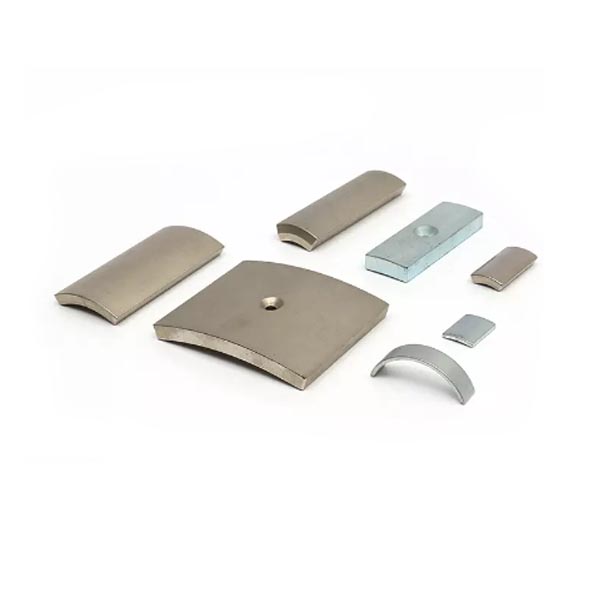
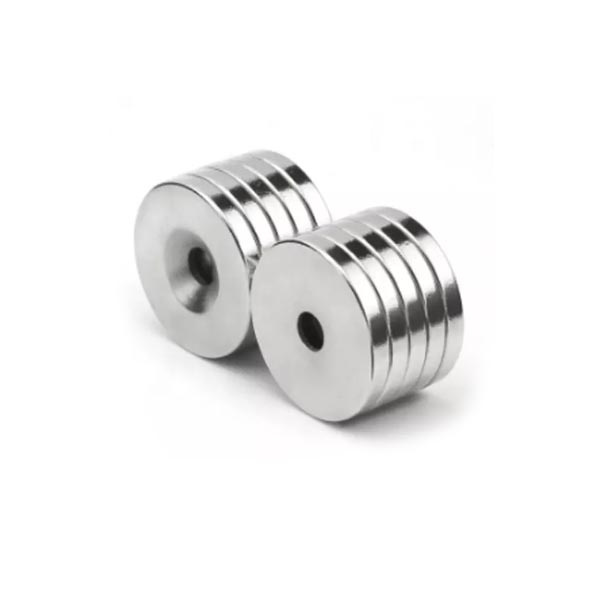
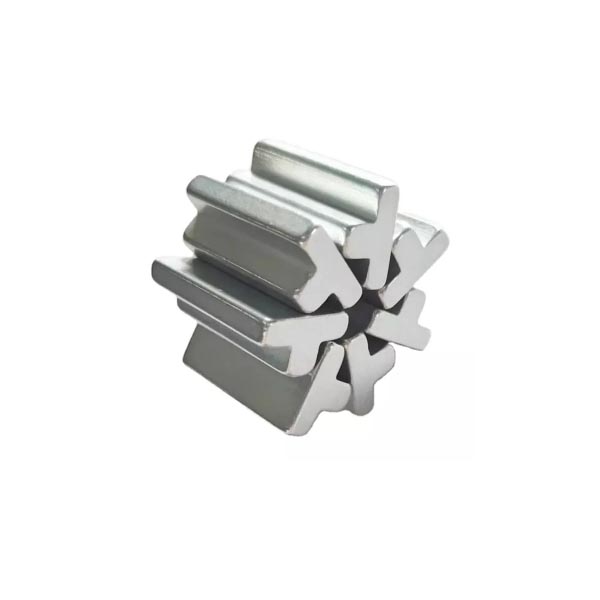
We can offer the OEM/ODM services of our products. The product can be customized according to your personalized requirements, including the size, Shape, performance, and coating. please offer your design documents or tell us your ideas and our R&D team will do the rest.
Other Types of Magnets



Post time: Mar-28-2026