
Custom ring magnets are not something you grab off a shelf. Every project brings different needs—hole diameters, wall thicknesses, specific pull angles, or unusual coatings. Because of that, manufacturers treat ring magnets as engineered components, not commodity items.
Here is what actually happens: your specifications directly shape the minimum order quantity (MOQ) and how long you wait for delivery. A simple ferrite ring with a standard coating? Fast and low volume. A high-grade N52 neodymium ring with an odd inner diameter and epoxy protection? That changes the math entirely.
Let me walk you through what drives those numbers, because I have seen too many buyers get stuck with either a warehouse full of unusable parts or a six-month delay they did not plan for.
Quick Take (bolded)
- MOQ usually starts at 1,000 pcs
- Lead time varies by specs
- Sampling required before production
- Complex designs increase time
Typical MOQ for Ring Magnet Manufacturing
Most custom ring magnet orders land between 1,000 and 10,000 pieces. But that range moves depending on who you are buying from and what you need.
Some suppliers accept 500 pieces for simple bonded ring magnets. Others refuse to touch anything under 5,000 units for sintered neodymium rings because the tooling and setup time simply are not worth it for smaller batches.
MOQ Ranges
- Bonded ring magnets (ferrite or NdFeB) – 500 to 2,000 pieces. These use simpler molds, so smaller runs hurt less.
- Sintered neodymium rings – 1,000 to 5,000 pieces minimum. The pressing and sintering process has high fixed costs per batch.
- High-temperature or ultra-precision rings – 2,000 to 10,000 pieces. Tight tolerances mean slower production and more rejects, so manufacturers need volume to justify the line time.
Factors Affecting MOQ
The document you shared mentioned how small tolerance deviations (1.98 vs 2.02 inches) ruined a handle fit. With ring magnets, the same problem appears around inner and outer diameter concentricity. Tighter concentricity requirements push MOQ higher because manufacturers must reject more parts.
Other factors include:
- Material grade – N52 or other high-end grades increase MOQ because raw material suppliers have their own minimums.
- Coating type – Nickel is standard. Epoxy, gold, or Parylene? Those require separate coating runs, so MOQ climbs.
- Magnetization pattern – Simple axial magnetization is easy. Multi-pole or Halbach arrays? That needs special fixtures, which drives volume requirements up.
Lead Time for Custom Orders
Here is a reality check. Lead time is not one number. It is two numbers: sample lead time and mass production lead time. Mixing them up is how projects fall behind.
Sample Production
Expect 10 to 15 calendar days for samples of custom ring magnets. That timeline assumes your drawing is complete and the manufacturer does not need to redesign anything.
Why the wide range? Simple rings with standard coatings might ship in ten days. Complex rings with unusual inner diameters, special chamfers, or multi-stage coatings can take three weeks just to get through tooling verification and first pressing.
Always order samples. The document mentioned testing prototypes to destruction. With ring magnets, pay close attention to inner diameter cracking and outer diameter chipping. Those two failure modes show up during handling, not on a pull test gauge.
Mass Production
Once samples are approved, mass production typically runs 4 to 6 weeks for bulk ring magnet orders. Add another one to two weeks if your order requires:
- Third-party dimensional inspection reports
- Special packaging (anti-magnetic shielding, foam inserts, individual bagging)
- Port-side consolidation for international shipping
I have seen rush orders ship in three weeks. I have also seen complex rings with gold plating take ten weeks because the coating line only ran once per month. Ask your supplier about their coating schedule before you commit.
Production Workflow Overview
Understanding the steps helps you see where time gets spent.
Specification Confirmation
This is where most delays actually start. You send a drawing. The manufacturer checks if the inner to outer diameter ratio is manufacturable. If the wall thickness is too thin relative to height, the pressing tool will break or the green compact will crack.
Once both parties agree on tolerances, coating thickness, and magnetization direction, the clock starts.
Manufacturing Stages
1. Tooling preparation – Custom tooling for ring magnets takes 5 to 10 days. Simple rings use standard tooling with minor modifications. Complex rings need entirely new punch and die sets.
2. Raw material mixing and pressing – Sintered rings are pressed in a magnetic field alignment fixture. This step alone can take 2 to 4 days for a batch.
3. Sintering and heat treatment – Typically 3 to 5 days. The furnace schedule cannot be rushed without affecting magnetic properties.
4. Grinding and sizing – Ring magnets almost always require grinding on the inner and outer diameters to achieve concentricity. This is slow, precise work. Plan on 3 to 7 days depending on batch size.
5. Coating application – Nickel takes 2 to 3 days. Epoxy or rubber coating adds 5 to 7 days because of curing time.
6. Magnetization – One to two days. Complex patterns need custom fixtures, which add tooling time before the first batch.
7. Inspection and packaging – Two to three days for pull testing, dimension checks, and coating thickness verification.
What Affects Delivery Time
Not all ring magnets are equal. Some fly through production. Others get stuck at every station.
Complexity
A basic ring magnet with axial magnetization and straight-cut edges is fast. Add a countersink, a keyway, or an oddball inner diameter that requires wire EDM? That EDM step alone adds one to two weeks because each part gets cut individually.
The same logic applies to multi-pole magnetization on rings. The fixture takes time to build, and magnetization itself runs slower because the machine must index the ring between pulses.
Coating
The document talked about nickel looking good until winter dew ruined it. With ring magnets, coating also affects lead time because rings have edges. Edges are where coatings thin out or fail entirely.
- Nickel-copper-nickel (standard) – Fastest, usually in stock.
- Epoxy – Adds 5 to 7 days. Requires oven curing.
- Rubber or TPE overmolding – Adds 10 to 14 days. The overmolding tool must be designed and cut first.
- Gold or other decorative coatings – Adds 7 to 10 days, often run in batches.
Volume
This one seems obvious, but here is the detail most buyers miss. Volume affects lead time non-linearly. A 2,000-piece order might ship in four weeks. A 10,000-piece order might ship in six weeks. But a 20,000-piece order could take ten weeks because the manufacturer only runs that specific ring size once per month.
Always ask: "How many pieces per production run, and how many runs per month?" That answer tells you more than any lead time quote.
Real Questions from Buyers (FAQs)
"Can you start with a lower MOQ for a trial order?"
Sometimes. Manufacturers will occasionally accept 500 pieces if you pay a higher per-unit price or cover tooling costs separately. The document mentioned this with modified stock handles. Same logic applies to ring magnets using stock outer diameters with custom inner bores.
"Does a higher grade like N52 take longer to produce?"
Not usually. N52 takes the same time as N42. But N52 is more brittle, so rejection rates are higher. Some manufacturers build extra lead time into N52 quotes to account for potential re-runs.
"What is the real cost difference that affects lead time?"
The document noted a 20–40% price jump for higher grades. For lead time, the bigger factor is coating. A standard nickel ring ships fast. An epoxy-coated ring with color coding for different field orientations? That adds two weeks minimum.
"Any storage or safety issues with bulk ring magnets?"
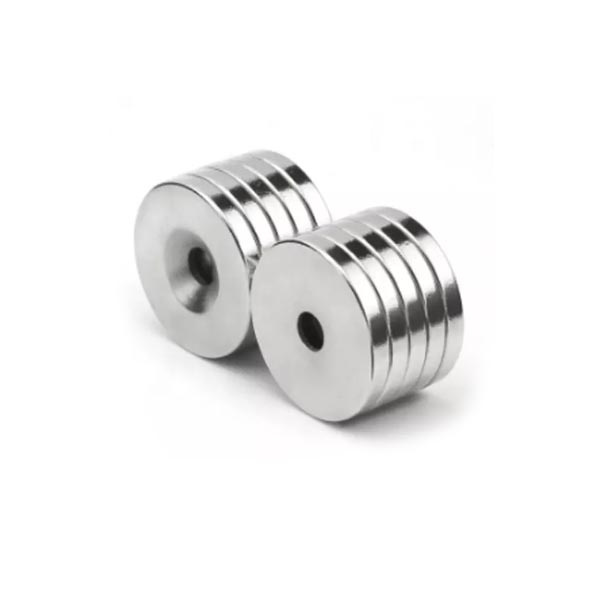
Yes. Stacked ring magnets attract each other aggressively. We have seen stacked rings pinch fingers and chip edges during warehouse handling. Also, keep bulk cartons away from sensitive electronics and magnetic stripe cards. The document mentioned wiping keycards from three feet away. With stacked rings, the field extends further.
Final Thought
Custom ring magnets are a precision game. MOQ and lead time are not just numbers a supplier gives you to be difficult. They reflect real limits in tooling, sintering cycles, grinding capacity, and coating schedules.
The smart move? Order samples from two or three suppliers. Test them in your actual application. Then commit to bulk ring magnet orders with the supplier who asked the most questions about your environment, your handling methods, and your quality requirements. That supplier will also be the one who delivers on time.
Need custom ring magnets for your project?
We offer OEM and ODM services for ring magnets in any size, shape, performance level, or coating. Share your design document or tell us your requirements. Our engineering team handles the rest!
Your Custom Neodymium Magnets Project
We can offer the OEM/ODM services of our products. The product can be customized according to your personalized requirements, including the size, Shape, performance, and coating. please offer your design documents or tell us your ideas and our R&D team will do the rest.
Other Types of Magnets



Post time: Apr-03-2026