
When you’ve worked with magnetic sensors, you quickly realize the magnet is more than a simple part—it’s the deciding factor between a sensor that holds its accuracy for the long run and one that begins to drift after just a few thousand cycles.
Ring magnets are a common choice in these applications, and for good reason. But getting them right—especially when you’re sourcing for production—takes more than picking a size off a datasheet.
I’ve seen engineers spec the perfect ring magnet on paper, only to run into integration issues because the magnetization pattern didn’t match the sensor’s readout logic. Let’s walk through ring magnet solutions for sensors
Quick Take
Ideal for encoders and position sensors
Require precise magnetization control
Dimensions affect system accuracy
Often custom-made for assemblies
Why Ring Magnets Are Used in Sensors
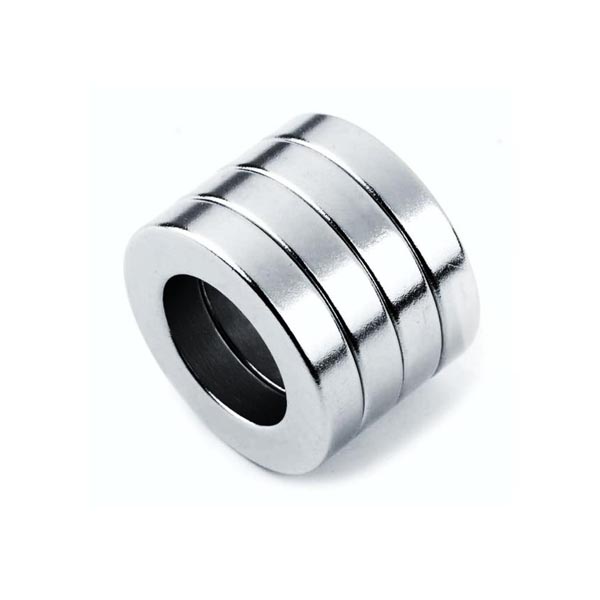
At first glance, a ring magnet looks simple. But that hollow center changes everything.
Stable Magnetic Field
Here’s a rephrased version that retains the original meaning while varying the structure and wording:
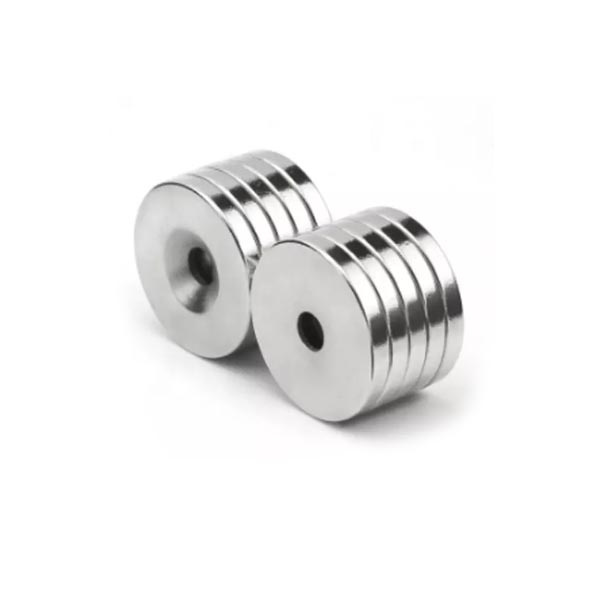
When compared to solid disc magnets, ring magnets offer superior control and predictability over the magnetic field. Their central bore enables uniform flux distribution, an essential trait for Hall effect sensors and magnetoresistive components that require stable, repeatable outputs.
In rotary encoders, for example, a multipole ring magnet generates alternating north-south poles around its circumference. The sensor reads these transitions to determine angular position. If the field is uneven, your encoder loses accuracy.
Compact Integration
Space is always tight in sensor assemblies. With a ring magnet, you can fit it right onto a shaft while still having room inside for other parts. You’re not just adding extra material—you’re building the magnet into the mechanical structure.
That’s precisely why ring magnets are used everywhere—from throttle position sensors in cars to industrial servo motors. They solve the placement problem without demanding a full redesign of the overall assembly.
When an application demands reliable performance in a compact space, ring magnet solutions for sensors are often the most practical choice.
Common Applications
Ring magnets show up in more places than most people realize. Here are a few where the specs actually matter.
Encoders
In magnetic encoders, ring magnets are what turn rotational motion into digital signals. Typically, the magnet is magnetized with several pole pairs, and the sensor tallies the transitions as the magnet spins.
The challenge here is magnetization precision. If the poles aren’t evenly spaced, your encoder’s resolution drops. For high-precision applications, you’re looking at custom magnetization fixtures—not off-the-shelf blanks.
Automation Systems
In automated assembly lines, ring magnets are used in position feedback systems, robotic joints, and even magnetic safety switches. These environments are unforgiving. Vibration, temperature swings, and stray magnetic fields from nearby equipment can all affect performance.
We’ve had clients swap out standard ring magnets for high-coercivity versions just to keep their systems stable near welding equipment. It’s one of those details that doesn’t show up in the prototype phase but becomes critical at scale.
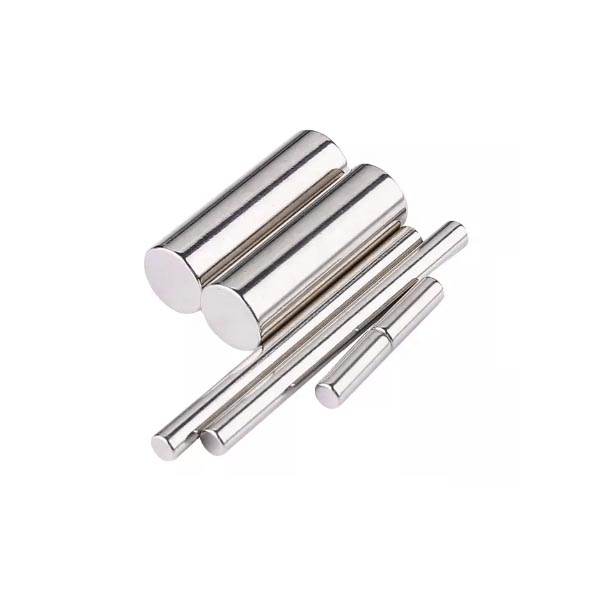
When simpler axial field requirements are involved, cylindrical magnet applications are also frequently used, particularly in smaller sensors where a ring configuration isn't needed.
Key Specifications
When we talk about ring magnets for sensors, three dimensions matter more than any others.
OD / ID / thickness
The outer diameter determines how much magnetic material you have. The inner diameter affects how the magnet mounts to the shaft. And thickness influences the field strength at the sensor’s detection distance.
Where things get tricky is tolerances. A ring magnet that’s slightly off on ID won’t seat properly on the shaft. If it’s loose, you get runout. If it’s too tight, you risk cracking the magnet during assembly. We typically specify tolerances down to ±0.05mm for precision applications, and we check samples with calipers before approving production.
Magnetization
This is where most of the engineering effort goes.
Ring magnets can be magnetized in different ways:
- Axial: poles on the flat faces
- Diameter direction: north-south across the diameter
-Multipole: alternating poles around the circumference
For encoders, multipole magnetization is standard. But the pole count has to match the sensor’s resolution. A 32-pole ring won’t work with a sensor expecting 16 transitions per revolution unless you adjust the firmware or signal conditioning.
We’ve also seen projects delayed because the magnetization direction was misaligned with the sensor’s orientation. It’s a simple detail, but it’s easy to miss when the focus is on dimensions and pull force.
Manufacturing Considerations
Ordering ring magnets for sensor assemblies is a different game than sourcing holding magnets for a shop floor. The tolerance for error is much tighter, and the cost of failure tends to be significantly higher.
Prototype with real working conditions
We always recommend testing magnet samples in the actual sensor housing, with the actual readout electronics. A ring magnet that works fine on the bench may behave differently once it’s installed near steel mounting plates or power cables.
Specify the magnetization pattern clearly
A dimensioned drawing is not enough. You need to define pole count, pole orientation, and allowable angular error. If these aren’t documented, you’re leaving room for interpretation—and that’s where mismatches happen.
Consider temperature early
Standard ring magnets generally move to N35SH or similar high-temperature grades once the environment surpasses 80°C. If your sensor is mounted near a motor or in an engine bay, the N42 that was adequate for prototyping could fail under production-level stress.
Ask the right questions
A good magnet supplier will ask about your sensor type, mounting method, and operating environment. If they don’t, that’s a red flag. We’ve had manufacturers tell us “it’s just a ring magnet” until we walked through the application and realized they needed multipole magnetization with ±2-degree accuracy.
A Few Things to Watch For
Handling and storage
Ring magnets—especially larger diameters—can be surprisingly strong. We’ve seen them snap together from several feet away, damaging both the magnets and anyone nearby. For production quantities, it’s worth planning how they’ll be handled and magnetized after assembly.
Coating choices
Nickel plating is a typical choice, but if your sensor assembly is exposed to moisture, salt spray, or cleaning chemicals, you'll likely need epoxy or rubber coatings. We discovered this after replacing a corroded batch—just six months into use in an outdoor automation environment.
Magnetization after assembly
For multipole rings, it’s sometimes better to magnetize after the magnet is installed in the assembly. This avoids alignment issues during shipping and ensures the poles are exactly where they need to be relative to the sensor.
Final Thoughts
Ring magnets are a small part of a sensor assembly, but they’re not a commodity. The difference between a sensor that performs reliably and one that fails in the field often comes down to how well the magnet was specified—and whether the manufacturing process actually delivered what was designed.
If you’re sourcing for production, take the time to test magnetization patterns, verify dimensions, and match the magnet grade to your operating environment. The upfront effort pays off the first time you ship a batch without field failures.
Your Custom Neodymium Magnets Project
We can offer the OEM/ODM services of our products. The product can be customized according to your personalized requirements, including the size, Shape, performance, and coating. please offer your design documents or tell us your ideas and our R&D team will do the rest.
Other Types of Magnets



Post time: Apr-01-2026