
Now that you know the basics of why ring magnets matter in speakers, let’s break down exactly how they operate within the motor assembly. This will make it easier to see why precision and consistency make all the difference in sound quality.
How Ring Magnets Work Inside Speakers and Audio Systems
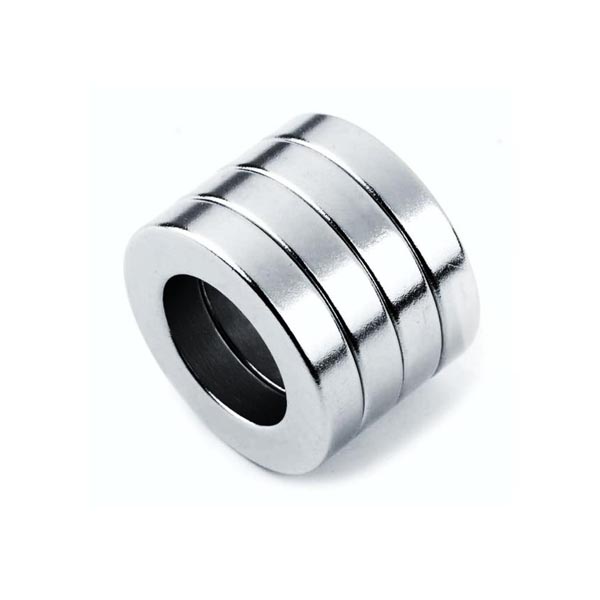
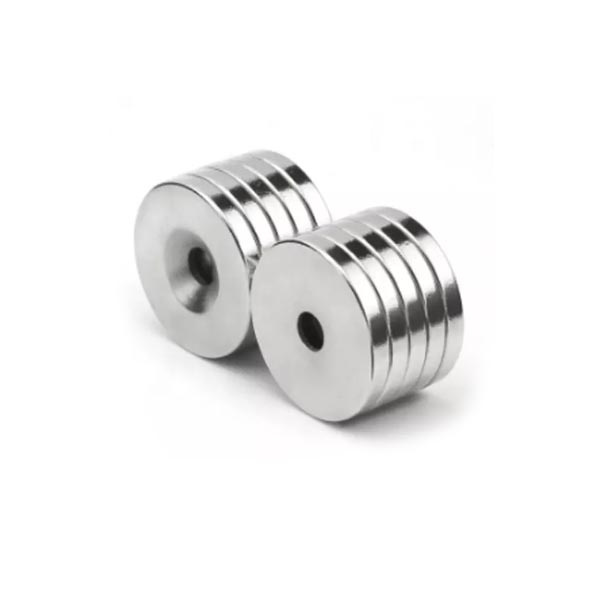
If you’ve ever taken apart a loudspeaker, you’ve probably noticed a donut-shaped magnet sitting at the back. That’s a ring magnet. And while it doesn’t look like much on its own, it’s actually doing the heavy lifting—quite literally—every time sound comes out of that driver.
Ring magnets are the heart of the motor structure in most dynamic speakers. Their job? To generate a steady, focused magnetic field that the voice coil can push against. Without that, you’d get nothing but silence—or worse, a lot of distortion and wasted power.
From what we’ve seen working with audio OEMs, getting the magnet right isn’t just about picking a high grade off a spec sheet. It’s about matching the magnet’s behavior to how the speaker will actually be used. And that’s where a lot of projects go sideways.
Quick Take
- Ring magnets create the magnetic field that moves the voice coil
- Shape and precision directly affect sound quality
- Grade, size, and magnetization need to match the application
- Bulk orders require tight quality control—no exceptions
What Ring Magnets Actually Do in a Speaker
Let’s walk through it. A dynamic speaker has three main parts: the cone (or diaphragm), the voice coil, and the motor assembly. The motor assembly is where the ring magnet lives.
Building a Magnetic Field That Stays Put
When fitted between a top plate and a back plate, the ring magnet forms a small, defined gap that houses the voice coil. This space is where electromagnetic energy drives speaker movement. The magnet must deliver a reliable, even magnetic field across the gap, with no instability or uneven performance.
Moving the Voice Coil, Moving the Air
Once the voice coil receives an electrical audio signal, it generates a dynamic magnetic field and acts as a controllable electromagnet. This field reacts against the steady magnetic flux from the ring magnet, driving the voice coil and the attached cone to oscillate. Higher oscillation frequencies create treble sounds, while greater travel distance strengthens low-frequency bass response.
The cleaner and more stable the magnetic field, the more accurately the voice coil follows the signal. That’s why ring magnets are preferred over other shapes in anything from studio monitors to car audio systems. Their geometry naturally supports a symmetrical field, which means less guesswork for the engineer tuning the crossover.
Why Ring Magnets Keep Showing Up in Audio Gear
They Hold Their Field Under Load
We’ve picked up a tough but valuable lesson over the years: a magnet that looks impressive on paper can easily fail in real‑world conditions. After hours of continuous use inside a hot, vibrating speaker cabinet, performance can drop sharply. Neodymium ring magnets with strong heat resistance keep their magnetic strength steady, even as the voice coil begins to warm up. This stability is far more important than many engineers realize. If a magnet loses power during use, speaker efficiency falls off quickly, and the entire frequency response becomes uneven.
They Let You Build Smaller, Louder Speakers
Neodymium ring magnets are ridiculously strong for their size. That’s why you see them in compact Bluetooth speakers, high-end headphones, and thin-profile soundbars. You get the magnetic field strength of a much larger ferrite magnet in a fraction of the space. For portable gear, that’s a game-changer.
But there’s a trade-off. Stronger grades like N52 are more brittle and more sensitive to heat. Sometimes a slightly larger N42 ring magnet ends up being the smarter choice—it handles temperature better, and it won’t shatter if someone drops the speaker during assembly.
Getting the Specs Right for Audio Applications
This is where custom orders live or die. If you’re sourcing ring magnets for a new speaker line, there are three things you need to lock down before the first prototype.
Magnet Grade Isn’t Just About Strength
Everyone wants the highest N number. But in real-world audio manufacturing, we’ve seen N52 cause more problems than it solves. It’s fragile. It doesn’t like heat. And if your speaker is going into a car door or a PA cabinet that sits in the sun, you’re asking for trouble.
High-temperature grades like N42SH or N40UH cost more, but they hold up when things get warm. We had one client switch to N42SH after a batch of N52 speakers came back with weak output following a summer of outdoor events. The grade change fixed it.
Dimensions Need to Be Tight—Really Tight
The gap where the voice coil sits is measured in fractions of a millimeter. If the inner diameter of your ring magnet varies by even 0.1 mm across a production run, you’ll get inconsistency in sensitivity from speaker to speaker. That’s a problem when you’re trying to sell matched pairs or build arrays.
We check samples with calipers. For bulk orders, we specify per-batch dimensional checks and reject anything that falls outside the agreed tolerance. If a supplier treats that as optional, keep looking.
Magnetization Direction Is Non-Negotiable
For speakers, the ring magnet needs to be magnetized axially—through the thickness, not across the diameter. If the magnetization is uneven, the magnetic field won’t be centered in the gap. The voice coil will rub, distortion will spike, and efficiency will drop. Good manufacturers test magnetization uniformity before shipping.
Manufacturing Considerations for Audio Components
When you’re ordering thousands of ring magnets for a speaker production run, you’re not just buying parts. You’re buying consistency.
Build-to-Print Is the Baseline
We work from engineering drawings that specify:
- Outer diameter, inner diameter, and thickness with tolerances
- Coating type and thickness (NiCuNi for most audio applications, epoxy for high-humidity environments)
- Magnetization direction and field strength minimums
- Pull-test requirements for sample lots
If a manufacturer asks why you need coating thickness specified, they haven’t done much audio work. We’ve seen nickel plating wear through on assembly fixtures, leading to corrosion complaints months later. Spec it, test it, verify it.
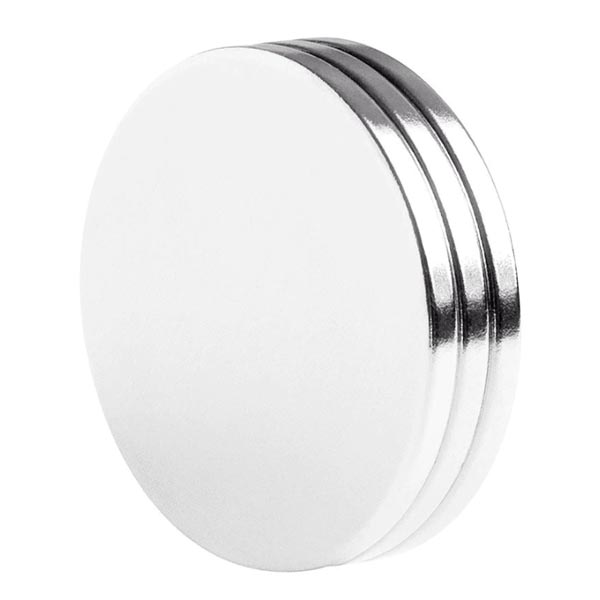
For deeper dives into material choices and manufacturing processes, check out our page on custom neodymium magnet production. And if you’re weighing ring versus disc designs for a specific driver, our overview of disc magnets in audio systems covers where each configuration makes sense.
Real-World Lessons from the Shop Floor
One that sticks with me: we had a customer building a line of powered PA speakers. Everything tested fine in the lab. Six months later, units started coming back with reduced bass output. The magnets had partially demagnetized.
Turns out, the internal temperature during long outdoor gigs was hitting 90°C at the magnet. Standard N42 wasn’t rated for that. We swapped to a high-temp grade, beefed up the ventilation in the design, and the next batch ran for two years without a single magnet-related return.
Moral of the story: test in the actual environment, not just the lab. A few hundred bucks spent on real-world prototype testing can save you a five-figure headache later.
Another one: handle integration. Not directly relevant to ring magnets, but if your audio product includes any magnetic accessories—detachable grilles, mounting hardware—the attachment method matters. We’ve seen adhesives fail in heat, potting crack in cold, and screws strip out under vibration. For shop tools or portable PA gear, rubber overmold handles with mechanical fasteners tend to outlast everything else.
FAQs
Can I use the same ring magnet for woofers and tweeters?
Generally no. Woofers need stronger motors with larger magnetic gaps to handle longer excursion. Tweeters use smaller, more focused magnetic fields. The magnet dimensions and grade are usually different.
What’s the minimum order for custom ring magnets in audio?
For fully custom tooling, most reputable suppliers start around 2,000 to 5,000 pieces. If you’re modifying a stock handle or using existing tooling, smaller runs can sometimes work.
Do ring magnets affect heat dissipation?
They don’t actively cool anything, but the magnet assembly is part of the thermal path. In high-power speakers, the magnet can act as a heatsink. Coating choice and mounting method both play a role.
Any safety issues with strong ring magnets on a production line?
Yes. Keep them away from magnetic storage media, pacemakers, and any sensitive test equipment. We’ve seen them wipe keycards from several feet away. Store them with keepers or in stacked, spaced configurations to avoid pinching injuries during assembly.
Your Custom Neodymium Magnets Project
We can offer the OEM/ODM services of our products. The product can be customized according to your personalized requirements, including the size, Shape, performance, and coating. please offer your design documents or tell us your ideas and our R&D team will do the rest.
Other Types of Magnets



Post time: Apr-02-2026