
If you’ve ever gone through magnet specifications, two shapes show up repeatedly: neodymium ring magnets and neodymium disc magnets. Though they can look alike at first sight, anyone with hands-on engineering and manufacturing experience will soon see they are designed for completely different functions.
A disc magnet is solid, dense, and all about raw holding strength. A ring magnet?
That center hole changes a lot—how you attach it, the shape of the magnetic field, and even the way it integrates into things like motors or sensor assemblies.Pick the wrong type, and you might find yourself wrestling with installation or left wondering why the results fall short.This guide covers the key differences, where each design really stands out, and what matters most when choosing magnets for a real-world application.
What Are Ring Magnets and Disc Magnets
Structure of Ring Magnets
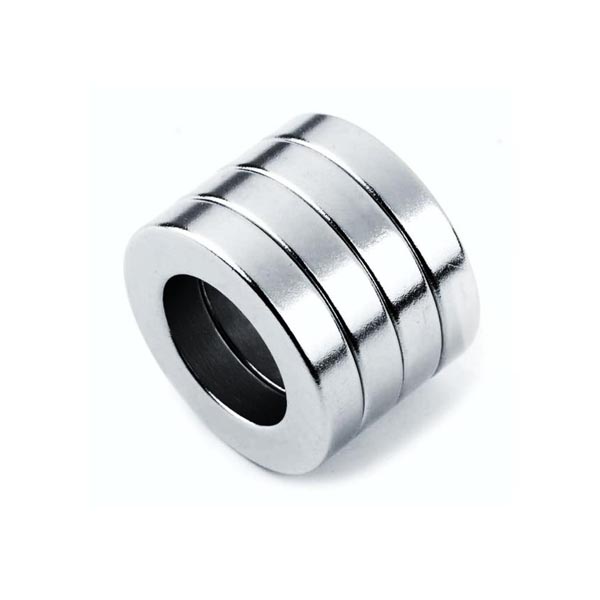
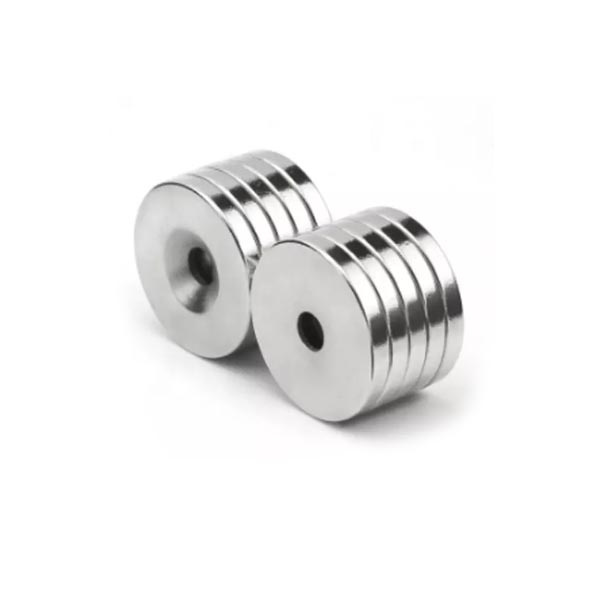
A neodymium ring magnet is basically a cylinder with a hole drilled straight through the center—sometimes people call it an annular shape. That opening gives you an inner diameter (ID), an outer diameter (OD), and thickness to work with. What that means in practice is you can slide it onto a shaft, thread a bolt through it, or even run wiring or fluid lines right through the middle. That one feature alone makes ring magnets useful in places where disc magnets just can’t go.
Structure of Disc Magnets
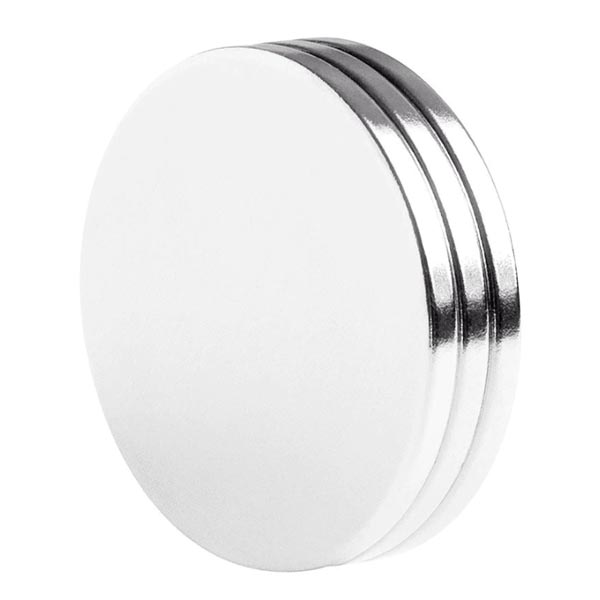
A neodymium disc magnet is the more straightforward option—no hole, just a solid chunk of magnetic material. Since it’s one continuous piece, the magnetic flux doesn’t get interrupted in the middle, giving you a stronger, more focused field on the faces. If your goal is to fasten something to a steel surface or clamp two surfaces together, a disc magnet usually outperforms a ring magnet with the same outer diameter.
Key Differences Between Ring and Disc Magnets
Shape and Geometry
On paper, the difference is just a hole. But that hole dictates how the magnet interacts with everything around it. A disc magnet sits on a surface; a ring magnet can wrap around a component. That geometry shift changes not just how you mount it, but also how the magnetic field behaves and where the forces actually go.
Magnetic Field Distribution
With a disc magnet, the strongest field is right on the faces, centered in the middle. It’s straightforward—put it against steel, and it sticks. A ring magnet, because of that open center, pushes flux both to the outer rim and the inner bore. That’s useful if you need a radial field or if you’re working with rotational sensing where the field needs to be picked up from the side rather than straight on.
Mounting and Assembly Options
Ring magnets give you mechanical mounting options that disc magnets don’t. You can bolt them down, stack them on a rod, or press-fit them over a sleeve. Disc magnets usually end up glued into a pocket or held in place by a housing. If the assembly already has a shaft or fastener running through it, a ring magnet can pull double duty as both the magnetic component and part of the mechanical stack.
How Magnetic Performance Differs
Field Distribution in Disc Magnets
The flux in a disc magnet flows axially—straight out from the faces. If you put a steel plate against it, you get maximum pull because the whole face is in contact. That’s why you see disc magnets used in door catches, magnetic tool holders, and anywhere you need a strong, localized grip.
Field Behavior in Ring Magnets
Ring magnets distribute flux differently. Part of the field goes out the faces, but a significant portion also radiates from the inner wall. In motors, that radial component is exactly what you want—it interacts with the windings around the rotor. In sensors, the field pattern through the center hole can be used to trigger Hall sensors at specific angles.
Impact on System Design
Choosing one shape over the other affects more than just the magnet itself. A ring magnet lets you design around a central shaft, keeping the system compact. A disc magnet might force you to add brackets or modify the housing just to hold it in place. Sometimes that extra complexity makes the ring magnet worth it even if the raw magnetic force is slightly lower.
Typical Applications of Ring vs Disc Magnets
Ring Magnets in Motors and Sensors
If you’ve ever taken apart a brushless DC motor, you’ve seen ring magnets. They mount directly onto the rotor shaft, often with multiple magnetic poles around the circumference. Same goes for rotary encoders—the magnet spins with the shaft, and a stationary sensor picks up the changing field. That center hole isn’t just convenient; it’s often essential for keeping the whole assembly aligned.
Disc Magnets in Holding and Mounting
Disc magnets are everywhere in holding applications. Magnetic bases for dial indicators, magnetic clamps in welding fixtures, even the little magnets that keep cabinet doors shut—those are almost always discs. Simple shape, strong hold, no extra mounting fuss.
Industrial and OEM Applications
Both shapes show up in industrial gear, but for different reasons. Ring magnets get used in magnetic separators where material flows through the center, and in loudspeaker assemblies where voice coils need clearance. Disc magnets show up in medical pumps, packaging line actuators, and any OEM application where space is tight and the magnetic requirement is straightforward.
How to Choose Between Ring and Disc Magnets
Assembly Requirements
Start with how the magnet physically gets installed. If the design already includes a bolt, shaft, or any kind of through-hole feature, a ring magnet often simplifies the assembly by eliminating extra parts. If the magnet just needs to sit in a recess or attach to a surface, a disc magnet usually makes more sense.
Magnetic Force Needs
Let’s put it this way: if you’re after raw holding force against a flat steel surface, a disc magnet with the same grade and outer diameter is almost always going to give you more grip than a ring magnet. Flip the script, though—if your setup needs a radial field, or you’re looking to magnetize with alternating poles around the perimeter, then a ring magnet is really the only way to go.
Space and Structural Constraints
Sometimes the decision comes down to what fits. A ring magnet can save axial space by letting a shaft pass through it. But you have to pay attention to ring magnet dimensions—if the inner diameter is too tight or the wall thickness too thin, you risk cracking during assembly. Disc magnets are simpler dimensionally but may require additional thickness to get the same magnetic performance.
Common Mistakes When Selecting Magnet Shapes
Choosing Wrong Geometry
One of the more common slip-ups is grabbing a disc magnet for an application that really needs a through-hole design. Suddenly you’re designing custom brackets and clamps just to hold the magnet in place. The reverse happens too—specifying a ring magnet for a simple holding application adds cost and complexity without any real benefit.
Ignoring Magnetic Field Behavior
Not all magnetic fields are the same. Some engineers assume a disc magnet can do everything a ring magnet can, but when they try to use it in a rotational sensor, the signal comes back unusable because the field pattern is wrong. Ring magnets, especially multi-pole ones, are designed for sensing applications; discs are not.
Confusing Ring and Disc Dimensions
This one shows up a lot in purchasing. Someone orders a ring magnet but only provides outer diameter and thickness, forgetting the inner diameter. Or they treat a disc magnet like a ring and start asking about ID tolerances that don’t exist. Small mistakes like that can delay production runs or lead to parts that don’t fit.
Manufacturing Considerations for Custom Magnets
If ready-made magnets don’t work for your specific project, going fully custom is almost always the smartest move. Custom neodymium magnets let you lock in the exact dimensions, tolerances, and magnetization your assembly needs — this is called build-to-print production. Choosing the correct shape early is extremely important, as it affects everything from tooling to coating and magnetization. A good manufacturer will always send you physical samples before mass production, so you can check real fit, magnetic power, and heat performance using actual parts, not just plans. This quick check saves you from costly errors and delays down the line.
Your Custom Neodymium Magnets Project
We can offer the OEM/ODM services of our products. The product can be customized according to your personalized requirements, including the size, Shape, performance, and coating. please offer your design documents or tell us your ideas and our R&D team will do the rest.
Other Types of Magnets



Post time: Mar-26-2026