
In modern industry and daily life, neodymium magnets with hooks are playing an increasingly important role. From lifting small parts in factory workshops to hanging shovels and spoons in home kitchens, they solve many problems of suspending and fixing objects with their strong magnetism and convenient hook design. Do you really know how to choose from the wide variety of hooks on the market?
What key factors need to be considered when calculating tensile force? What are the advantages of different types of hooks in industrial applications? What key parameters and technical requirements must be mastered? When buying for the first time, how to avoid those common "pitfalls"? If you have these questions, the following content will give you a comprehensive analysis, take you to deeply understand neodymium magnets with hooks, and help you make the most correct choice.
Tensile Force Calculation and Selection Guide for Neodymium Magnets with Hooks
First of all, in terms of tensile force calculation, the core is to look at the "actual load-bearing requirements" and "magnetic attenuation coefficient". The nominal tensile force is the maximum value under ideal conditions, but in actual use, it needs to be discounted. For example, if the surface is uneven (such as a rusty iron plate), the magnetism will decrease by 10%-30%; if it is hung horizontally (such as the side of a vertical iron door), it should be estimated as 60%-70% of the nominal tensile force; if the ambient temperature exceeds 80°C, the magnetism of neodymium magnets will decrease significantly. For high-temperature scenarios, a temperature-resistant model (such as N38H) should be selected, with an additional 20% margin. Simply put, the calculated actual required tensile force must be at least 30% more than the weight of the object you want to hang to be safe.
When choosing, first determine the scenario: whether it is for lifting parts in the workshop (requiring industrial-grade with safety buckles) or hanging tools at home (ordinary ones with anti-scratch coating are sufficient). For bathroom use, a waterproof nickel-plated model must be selected to avoid rust and demagnetization.
Look at the hook design: if the load-bearing capacity exceeds 5 kg, it is better to choose an integrally formed hook. Welded ones are easy to fall off under strong tensile force; if you need to change positions frequently, hooks with rotation function are more flexible.
Don't ignore the magnet size: for neodymium magnets of the same grade (such as N38), the larger the diameter and the thicker the thickness, the stronger the tensile force. If the installation space is limited, priority should be given to higher grades (for example, N42 has a greater tensile force than N38 of the same size).
Finally, a reminder: don't just look at the price when choosing. Low-priced products may use recycled materials as the magnetic core, with false tensile force labels and are easy to demagnetize. Spend a little more to choose regular manufacturers, at least to ensure that the nominal tensile force does not differ much from the actual test data.
Common Hook Types of Neodymium Magnets with Hooks and Their Industrial Comparison
The first is the straight hook type. The hook body is straight, and the force is stable. It is often used in industry for hanging mold accessories and small steel pipes. The disadvantage is poor flexibility; it is easy to shake if hung askew.
Rotating hook. The rotating hook can rotate 360 degrees and is used for lifting parts in the workshop and hanging tools on the assembly line. There is no need to move the magnet when adjusting the angle. However, the load-bearing should not exceed 5 kg, otherwise the hook is easy to loosen.
Folding hook. It can be folded when not in use, suitable for hanging small tools such as wrenches and calipers next to machine tools to save space.
For heavy work, choose straight hooks; for flexibility, choose rotating hooks; for saving space, choose folding hooks. Choosing according to the actual needs of the workshop is definitely correct.
Key Parameters and Technical Requirements for Batch Customization of Neodymium Magnets with Hooks
One is the magnetic performance grade. From N35 to N52, the higher the number, the greater the magnetic flux density and the stronger the tensile force. For industrial use, it should start from at least N38. In often humid places such as bathrooms, stainless steel hooks should be selected for better durability.
Technical requirements: the coating should be uniform, nickel-plated or zinc-nickel alloy. The salt spray test must pass at least 48 hours to be not easy to rust. The connection between the magnet and the hook must be firm. Welded ones must have no false welding, and integrally formed ones are more reliable. In addition, for temperature resistance, ordinary models should not exceed 80°C. For high-temperature environments, M or H series must be selected, otherwise, they are easy to demagnetize. Only when these meet the standards can you use them with confidence.
How to Avoid These Five Common Mistakes When Buying Neodymium Magnets with Hooks
First, don't just look at the nominal tensile force. Ask the manufacturer for actual test data. Some with false labels can differ by half, which will definitely cause problems when hanging heavy objects.
Second, ignore the hook material. If you buy iron hooks to save money, they will rust and break in a humid environment in two months. At least choose nickel-plated or stainless steel hooks.
Third, don't check the coating process. Just asking "whether it is plated" is useless. You must ask for the salt spray test report. Don't touch those with less than 48 hours, otherwise, they will rust when used at sea or in the workshop.
Fourth, forget the ambient temperature. Ordinary neodymium magnets will demagnetize when the temperature exceeds 80°C. For places such as next to ovens and boilers, you must specify a temperature-resistant model (such as N38H).
Fifth, be lazy and don't test samples. Before buying in bulk, take a few to test the load-bearing capacity and check the workmanship. Don't wait until the bulk goods arrive to find that the hooks are askew or the magnets are cracked, which will make returns and exchanges very troublesome.
Remember these points, and you will basically not step on big mines.
Your Custom Neodymium Magnets Project
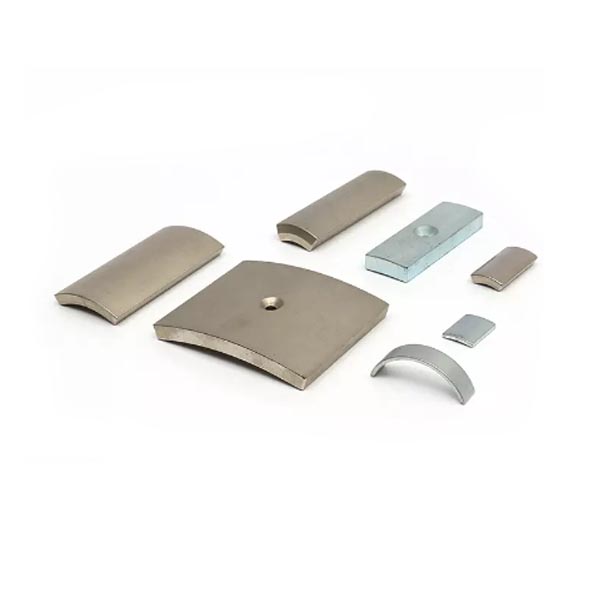
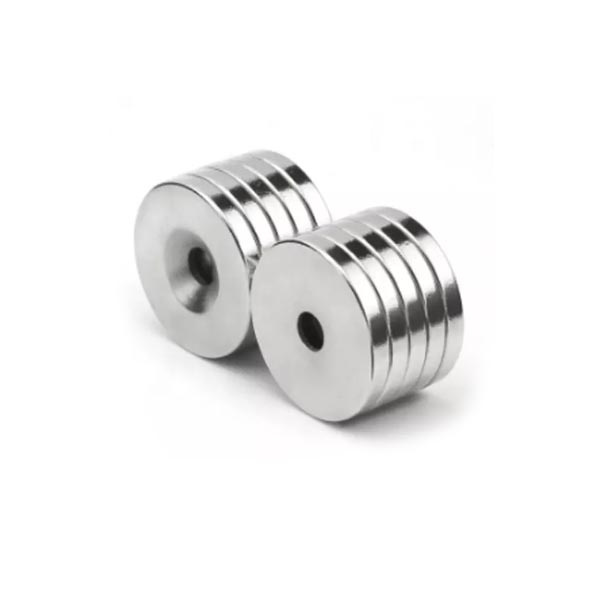
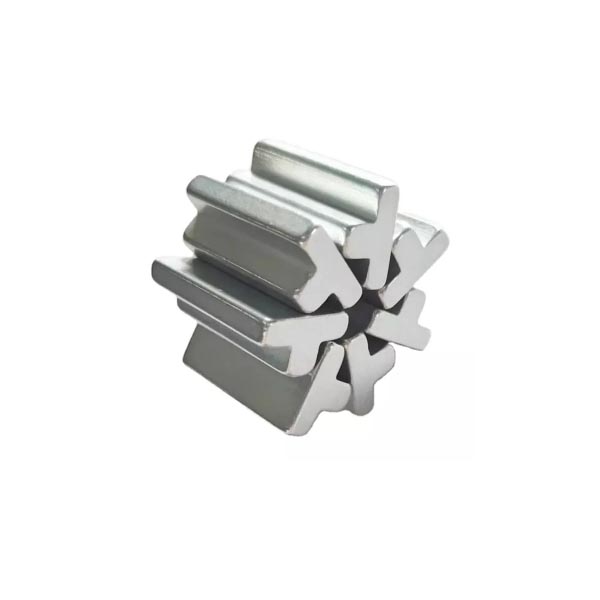
We can offer the OEM/ODM services of our products. The product can be customized according to your personalized requirements, including the size, Shape, performance, and coating. please offer your design documents or tell us your ideas and our R&D team will do the rest.
Other Types of Magnets



Post time: Aug-07-2025