
As a professional sintered neodymium magnet manufacturer rooted in China, Fullzen Technology receives regular technical consultation from global assembly and fixture design engineers. Lots of project failures happen when designers blindly select mounting styles without checking working environment: adhesive-backed magnets peel off under high heat, while undersized countersunk holes lead to screw cracking during long-term equipment running. We compare four mainstream installation approaches in detail, classify three mainstream adhesive materials widely used on adhesive neodymium magnets, and match every fixing method to corresponding application scenarios. All finished magnets pass RoHS and REACH compliance tests, and we provide low-cost trial samples to verify your on-site assembly performance ahead of bulk purchase.
Overview: Two Core Pre-Processed Disc Magnet Types (Countersunk & Adhesive-Backed)
Structural Features of Countersunk Hole Neodymium Disc Magnets
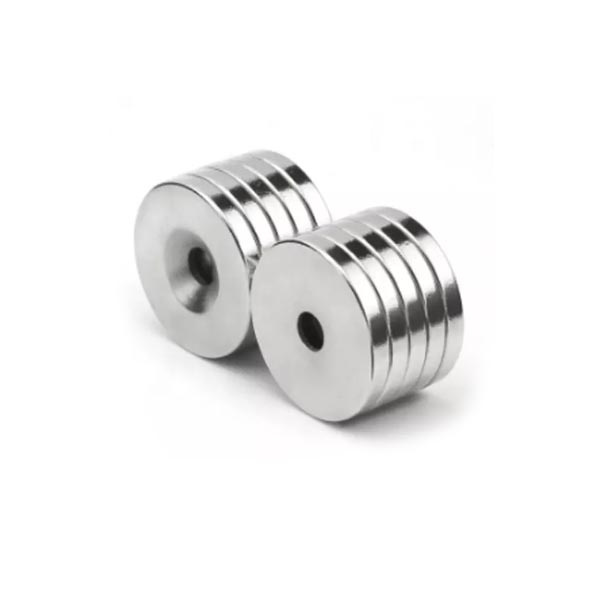
Countersunk disc neodymium gets tapered sink holes pre-drilled during machining, allowing flat-head screws to sink fully inside magnet surfaces without protruding bumps. Most regular sink holes follow standard metric sizing, with common countersink angles set at 90 degrees for universal standard screw matching. We usually add triple-layer nickel coating on hole inner walls to avoid rust erosion after long-time assembly, especially for magnets installed inside outdoor automation equipment. Unlike plain solid discs, drilled variants add extra machining cost but deliver outstanding pulling resistance for lifelong fixed assembly structures.
Basic Property of Pre-Coated Adhesive Backed Disc Neodymium
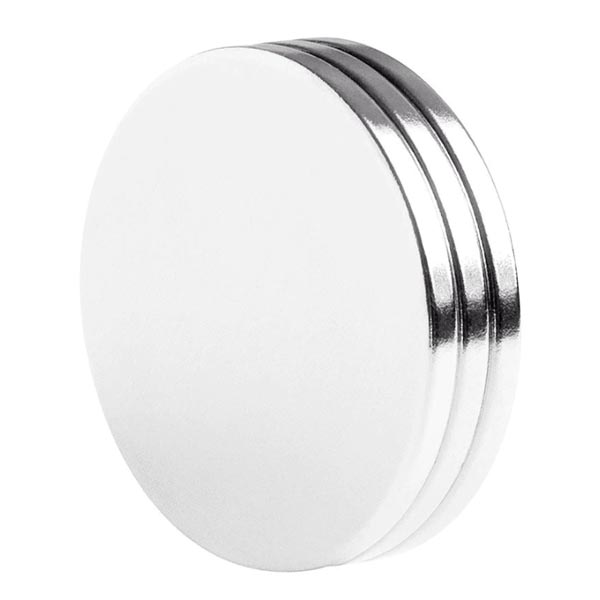
Factory pre-laminated adhesive-backed disc magnets belong to easy-install semi-finished goods, covered with protective release paper to keep glue layer intact before construction. These adhesive neodymium magnets skip drilling and screw locking steps entirely, sticking directly onto smooth metal, plastic or wood substrates for quick temporary positioning. Different glue formulas bring big gaps in heat resistance and bonding strength, so adhesive selection becomes the core decision point before your formal fixture production.
Four Main Mounting Solutions Full Comparison Table
(Scenario+Cost+Durability)
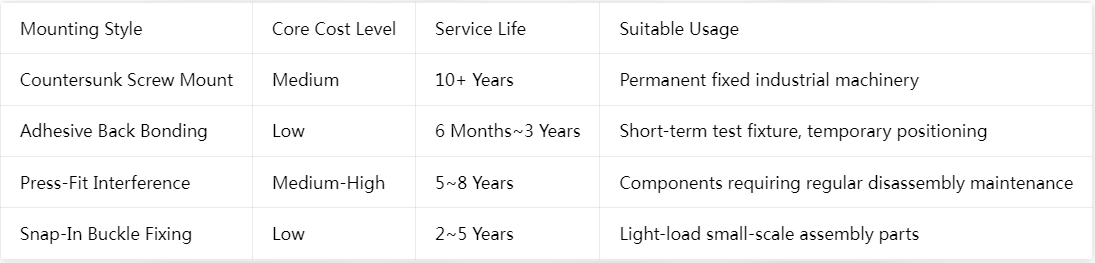
Permanent Fixing: Countersunk Screw Mount (Best for Long-Term Fixed Equipment)
Screw locking via prefabricated countersink remains the most reliable permanent fixing solution available. After fastening flat head screws into reserved sink holes, magnets stay firmly locked even under continuous vibration and temperature cycling. Our factory controls hole positional tolerance within ±0.05mm for standard products to guarantee smooth screw installation without forced knocking during on-site assembly.
Temporary Positioning: Adhesive Back Mount (3 adhesive raw material classification)
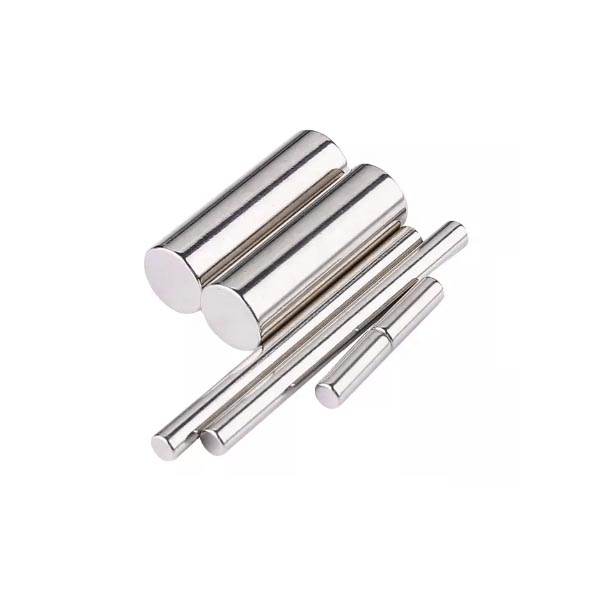
Adhesive sticking works best for short-cycle assembly positioning tasks, which is why adhesive neodymium magnets gain huge popularity among lab and prototype engineers. Three mainstream industrial glues dominate current market choices, each with distinct applicable temperature ranges and bonding load limits. Besides standalone disc variants, adhesive pre-coated cylindrical neodymium magnets also serve miniature fixture positioning in many compact automated assemblies.
Frequent Disassembly: Press-Fit Interference Installation Rules
Press-fit mounting relies on interference tolerance between magnet outer diameter and component reserved cavity, pressing magnets into housings with small hydraulic tools. We set controlled oversizing tolerance on custom disc dimensions to ensure tight clamping while allowing manual prying removal for periodic equipment inspection and part replacement.
Quick Assembly: Snap-In Buckle Mount for Light-Duty Fixtures
Snap structure fits lightweight consumer product assembly only; magnets get fixed by surrounding plastic buckle clips without glue or metal fasteners. This economical option cuts total assembly time greatly yet cannot bear heavy pulling force or high-temperature working surroundings.
Detailed Adhesive Grade Selection: 3M / Acrylic / Rubber-Based Glue Differentiation
3M Industrial Double-Sided Adhesive: High Temp & Heavy Load Application
In our more than 12 years of production, we find many engineers pick wrong adhesive due to untested substrate and ambient temperature. Original 3M industrial adhesive can resist continuous working temperature from -40℃ up to 120℃, bearing larger vertical pull weight for heavy-duty temporary positioning. It ranks as our premium glue option for high-standard export adhesive neodymium magnets.
General Acrylic Adhesive: Cost-Effective Indoor Temporary Fixing
Standard acrylic glue owns balanced cost and bonding performance, suitable for indoor room-temperature fixtures below 60℃ continuous working heat. Its average normal-temperature peel strength hits roughly 1.2kg per square centimeter under lab test conditions, meeting most regular workshop temporary positioning demands with controlled project expenditure.
Rubber-Based Adhesive: Flexible Bond for Uneven Surface Substrates
Rubber-based adhesive features excellent soft fitting property, filling tiny gaps on uneven rough substrate surfaces where rigid acrylic glue fails to attach tightly. Yet its upper temperature cap only reaches around 50℃, so we never suggest it for equipment working inside closed high-temperature cabinet spaces.
Scenario Matching Guide by Actual Assembly Demand
Permanent Industrial Equipment → Recommended Countersunk Disc Magnets
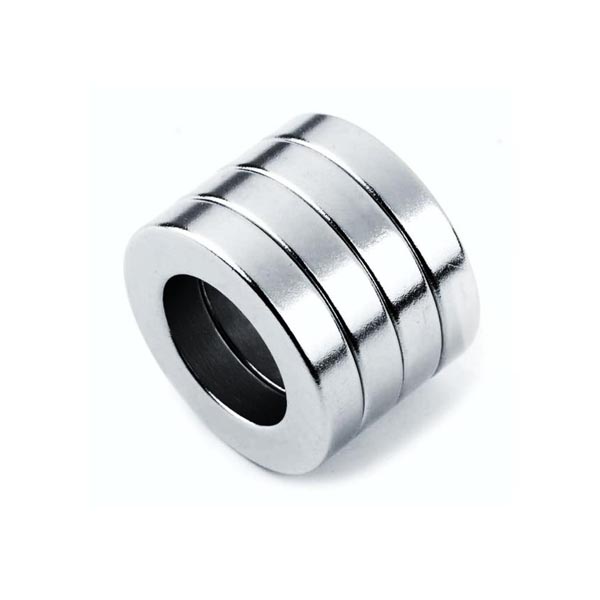
Heavy automation frames, conveyor positioning modules and outdoor monitoring hardware need lifelong stable magnet fixation, making countersunk disc NdFeB the primary pick. For oversized servo mechanical frames with hollow inner space, designers often match these discs alongside countersunk hollow ring rare earth magnets to optimize the whole magnetic circuit layout.
Product Test/Temporary Fixture → Preferred Adhesive-Backed Disc Magnets
Prototype testing jigs, short-run batch inspection fixtures widely adopt adhesive neodymium magnets; users can peel off magnets cleanly without leaving residual glue damage on finished workpiece surfaces after test completion.
Regular Maintenance & Repeated Disassembly → Press-Fit Custom Disc Option
Medical device modules and precision testing instruments requiring periodic part replacement choose press-fit customized discs; we adjust outer diameter tolerance precisely based on clients’ housing drawing parameters.
Fullzen Custom Manufacturing Support for Special Mounting Disc Magnets
Custom Countersunk Hole Diameter, Depth & Position Tolerance
When standard sink hole sizes cannot coordinate with your proprietary screw specs or mechanical design, custom-processed bespoke neodymium magnets get tailored with personalized hole depth, bore diameter and hole offset tolerance as per your engineering drawings.
Custom Adhesive Thickness, Glue Brand & Coating Specification
We support switching adhesive thickness, glue brand and outer plating finishes for bulk customized adhesive neodymium magnets. Clients may upgrade nickel coating to epoxy surface treatment if their finished goods face damp or corrosive working environments.
Frequently Asked Questions from Global Assembly Engineers
Can we switch adhesive type after disc magnet production?
Once adhesive gets laminated and cured on magnet surface, glue replacement becomes impossible. We confirm adhesive formula before mass production according to your working environment data to avoid later assembly loss.
What’s the max working temperature of each mounting structure?
Countersunk fixed discs with nickel coating sustain -50℃~150℃; 3M adhesive bonded parts top out at 120℃; rubber-glued adhesive neodymium magnets fail above 55℃ ambient continuous heat.
Your Custom Neodymium Magnets Project
We can offer the OEM/ODM services of our products. The product can be customized according to your personalized requirements, including the size, Shape, performance, and coating. please offer your design documents or tell us your ideas and our R&D team will do the rest.
Other Types of Magnets



Post time: Jun-04-2026